Australian spider questions
Baby Huntsman or Crab Spider? Tiny Spider Clues
How to compare tiny wall spiders, juvenile huntsmans and crab spiders using stance, scale, movement and habitat without forcing a species-level identification.
Quick answer
Start here
A tiny spider with sideways or long front legs is not automatically a baby huntsman. A fully grown wall spider can be only a few millimetres long, while crab spiders often hold their first two leg pairs forward for ambush. Juvenile huntsmans usually show a flatter body and legs spreading sideways, but scale, location and a clear top-down photo are essential.
Useful clues
Read the situation first
Actual body size
Record body length separately from leg span. A 2–3 mm spider may be a tiny adult species, not a baby version of a familiar large spider.
Front-leg posture
Crab spiders often emphasise the first two pairs like open arms. Huntsman legs spread broadly sideways around a flatter body.
Movement
Huntsmans tend to run rapidly; wall spiders can dart in tight circles; crab spiders often pause and ambush. Movement supports an ID but never proves it.
Surface and habitat
Walls, bark, flowers and leaf edges point toward different lifestyles. Include the surface in at least one photo.
Practical steps
What to do next
- Take a sharp top-down photograph without moving the spider onto your hand.
- Add a second wider photo showing wall, bark, leaf, flower or ground context.
- Estimate body length with a nearby ruler or familiar object placed safely away from the spider.
- Record state, suburb or region because Australian spider distributions differ.
- Notice whether it runs continuously, darts in circles, moves sideways or waits with front legs extended.
- Stop at family-level identification when the photograph does not show eyes, markings or other diagnostic details.
Tiny does not necessarily mean young
Australia has many naturally minute spider species. Recent identification requests repeatedly call fully grown wall spiders baby huntsmans because both can look like fast dots with widely placed legs. The safest first question is not 'what baby is this?' but 'what is its measured body length and where is it living?'
Huntsman shape
Huntsmans have legs that extend forward and sideways and many have a flattened body suited to bark, crevices, walls and window frames. Very young huntsmans can be pale and difficult to distinguish, so family-level clues are more realistic than species guesses from a phone photo.
Crab-spider shape
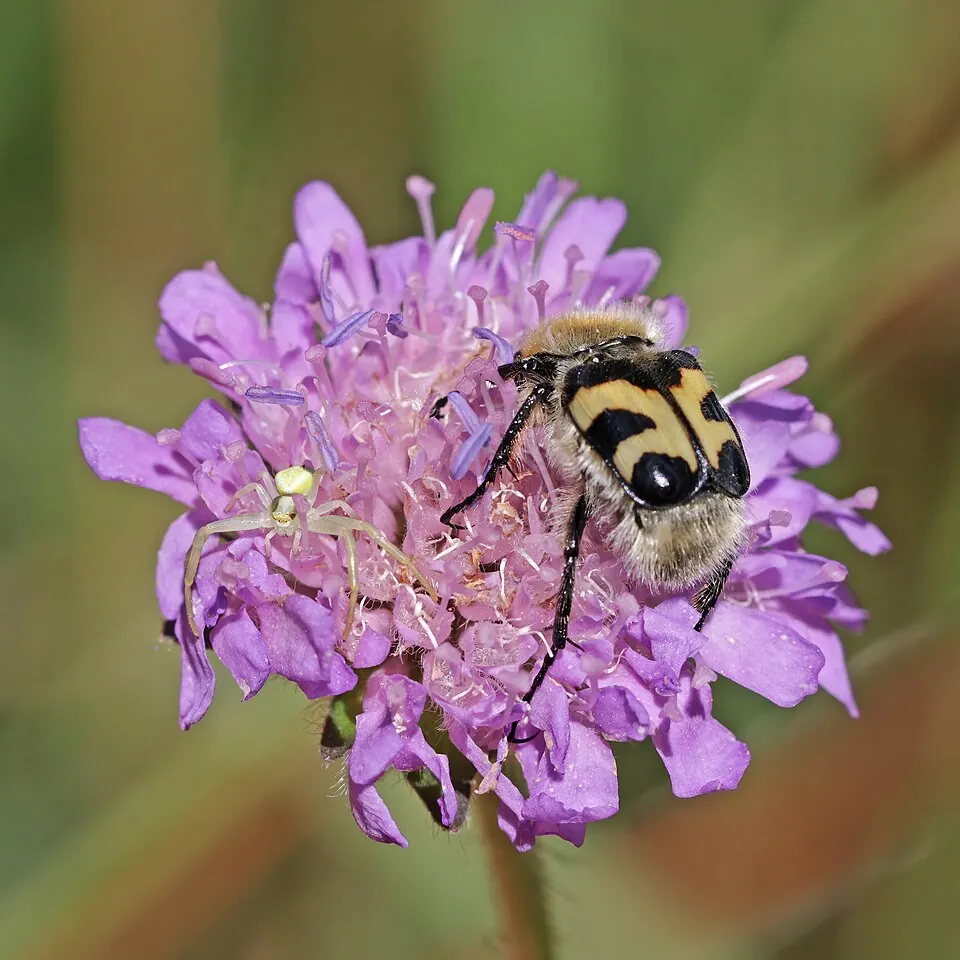
Flower and other crab spiders are ambush hunters. Their first two leg pairs often look longer or stronger and are held forward or outward. Many are found on vegetation, flowers or bark where colour and shape provide camouflage. Not every spider with a crab-like stance belongs to the same family.
Wall spiders are an important third option
Wall spiders can be fully adult at a size that readers interpret as a hatchling. A photo with a concrete pillar, skirting board or grout line is especially valuable because it establishes the scale that a close crop hides.
Why one photo often cannot settle it
Leg posture changes while a spider moves, and perspective can make rear legs disappear or front legs look unusually long. Use the identifier to compare several profiles, but label the result uncertain when eye arrangement and fine markings are absent.
Profiles to compare
Open the closest spider profiles
Common questions
Baby Huntsman or Crab Spider? Tiny Spider Clues FAQ
Are baby huntsmans dangerous?
Huntsmans are not considered medically significant, but any spider can bite defensively. Do not handle a tiny unknown spider.
How small can an adult wall spider be?
Some are only a few millimetres long, which is why they are often mistaken for spiderlings.
Do crab spiders walk sideways?
They can move sideways, but movement alone is not a reliable family identification.
Why does it look like a leg is missing?
Overlap, shadows and a leg held behind the body can hide limbs in photos. Take another angle before assuming injury.
Can I identify it from leg shape alone?
Usually only to a shortlist. Size, habitat, location, eyes, body proportions and markings all matter.
Identification is not medical advice
If a bite has occurred or someone seems unwell, follow Australian health advice and seek urgent help for serious symptoms.