4-step spider ID
Spider Identifier
Compare Australian spiders by location, size, markings and where they were found.
Start here
Answer the clues, then compare likely matches.
Use state, size, markings and hiding place to narrow the guide before opening a full spider profile.
Start spider IDSpider ID tool
Spider Identifier
If it is safe, note the spider’s size, markings, web or hiding place, and where it was found. Do not touch or move it for a better look.
Safety shortlist
Spiders to treat with extra caution
If one of these looks possible and a bite has happened, do not wait for perfect identification. Call 000 for severe symptoms or 13 11 26 for poisons advice.
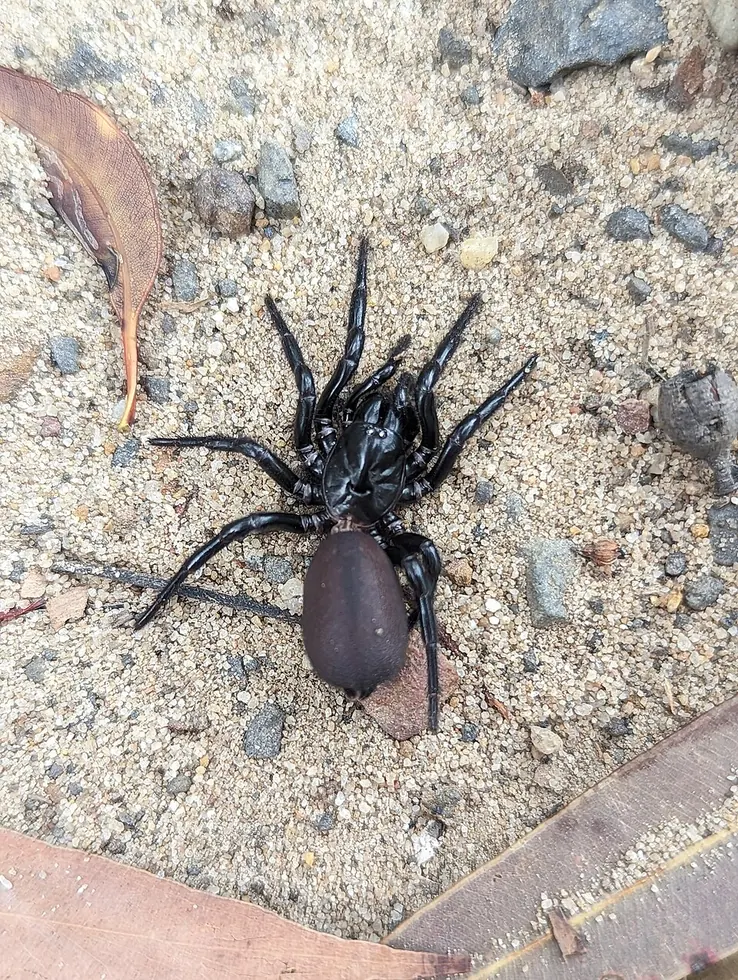 Medical emergency potentialSydney funnel-web spiderGlossy, robust, dark NSW spider associated with silk-lined burrows around the Sydney region and nearby eastern NSW.
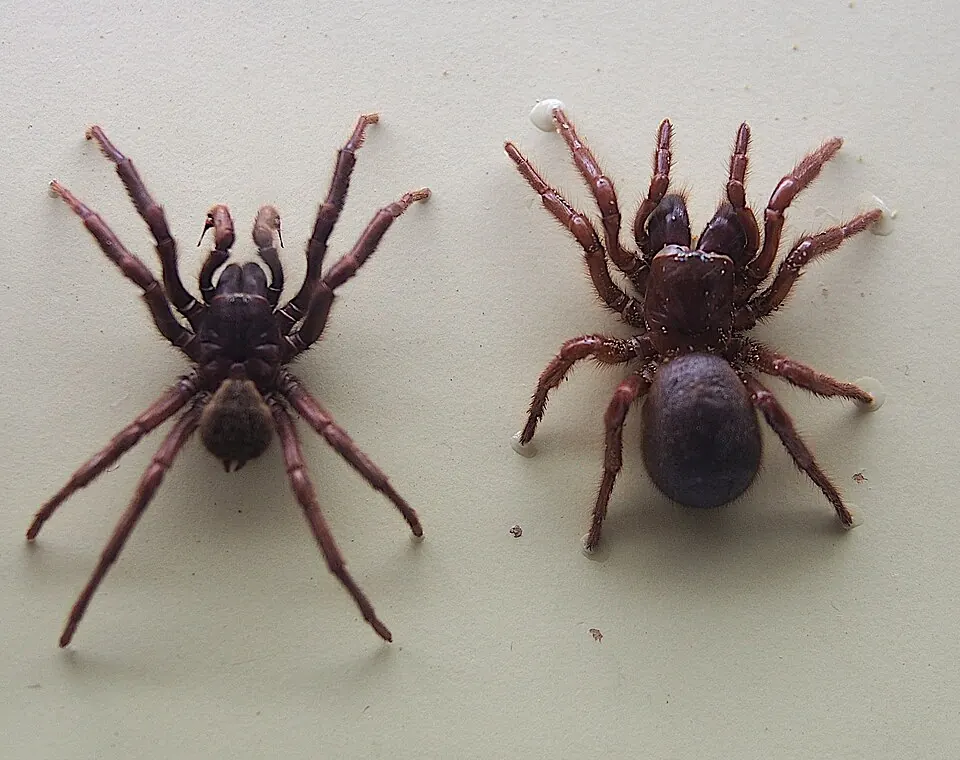 Medical emergency potentialAustralian funnel-web spidersA group of dark, mygalomorph spiders from eastern Australia, often linked with silk-lined retreats and burrows.
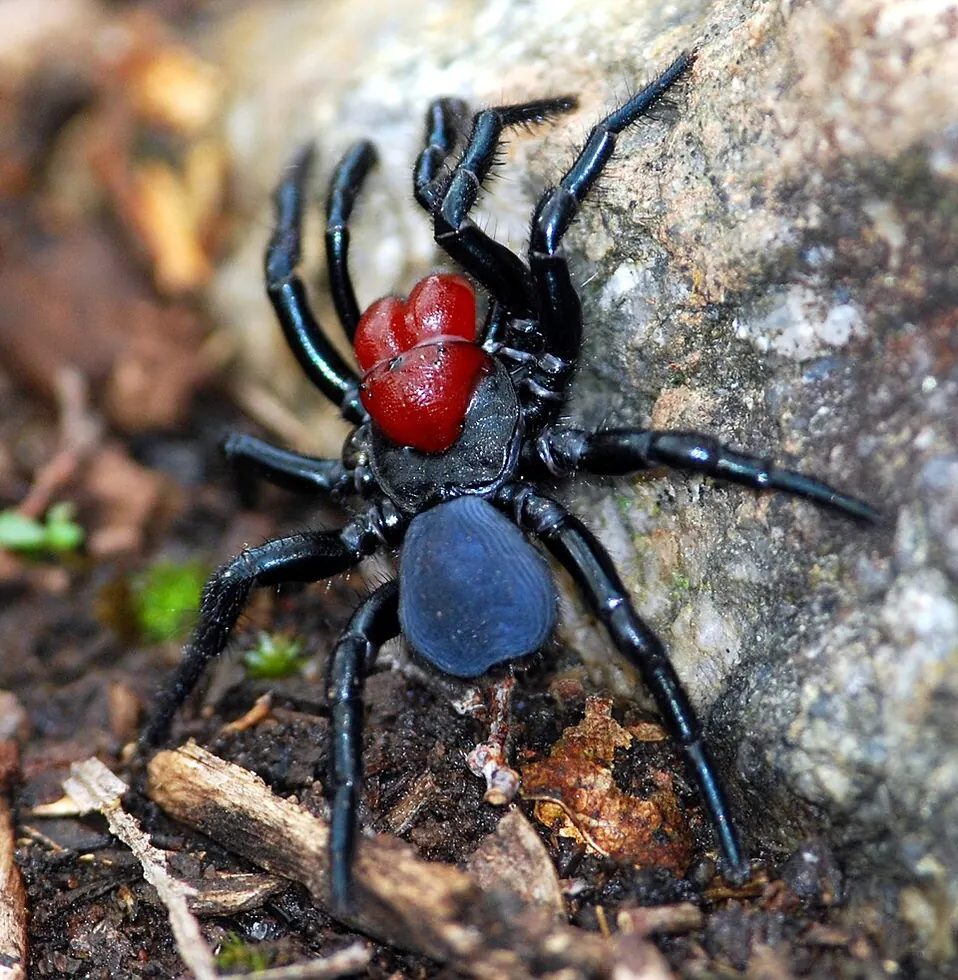 Medically significantMouse spiderStocky ground spider; males may have a red head or pale patch depending on species, and can be confused with funnel-webs.
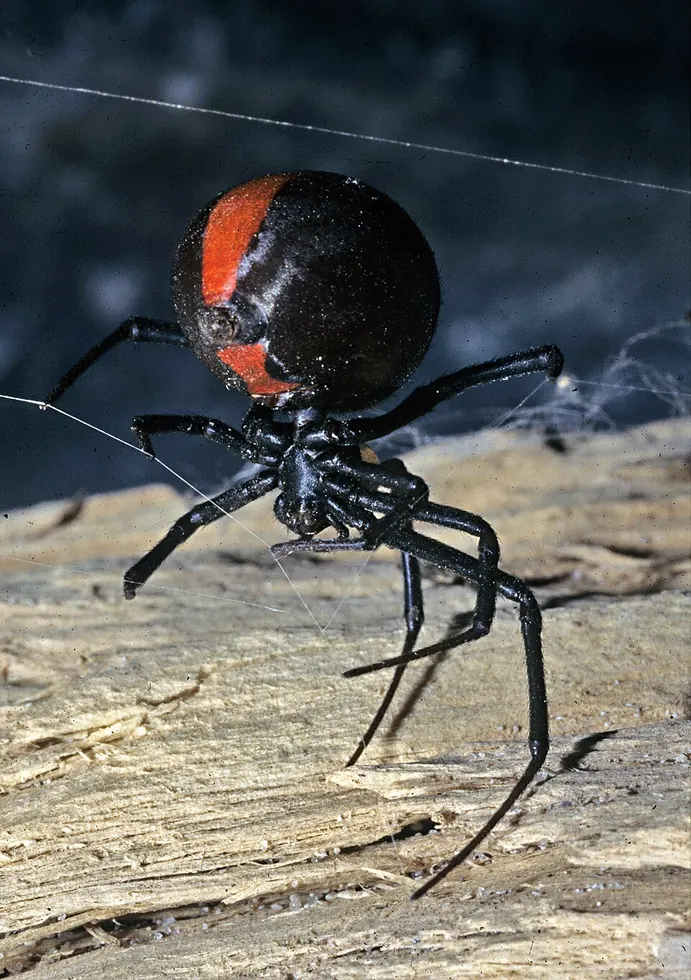 Medically significantRedback spiderSmall black spider, usually female, with a red stripe or hourglass marking and a messy web in dry sheltered places.
Field guide
Browse common Australian spiders
Start with a familiar shape, then open the full profile to compare size, markings, location and web clues.
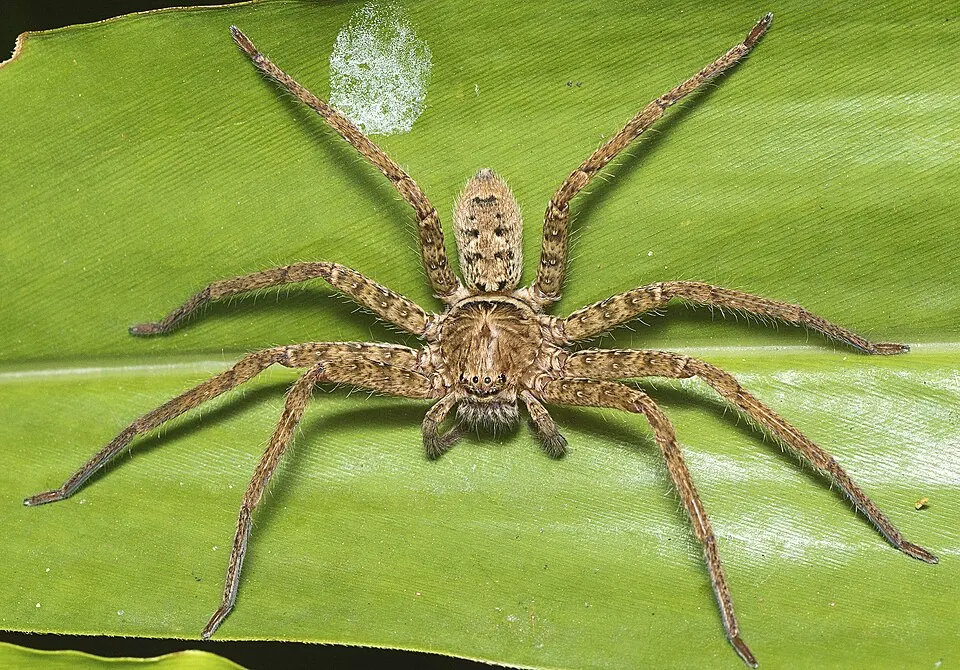 Usually low riskHuntsman spiderLarge, flat, long-legged spider often seen on walls, ceilings, tree bark and inside cars.
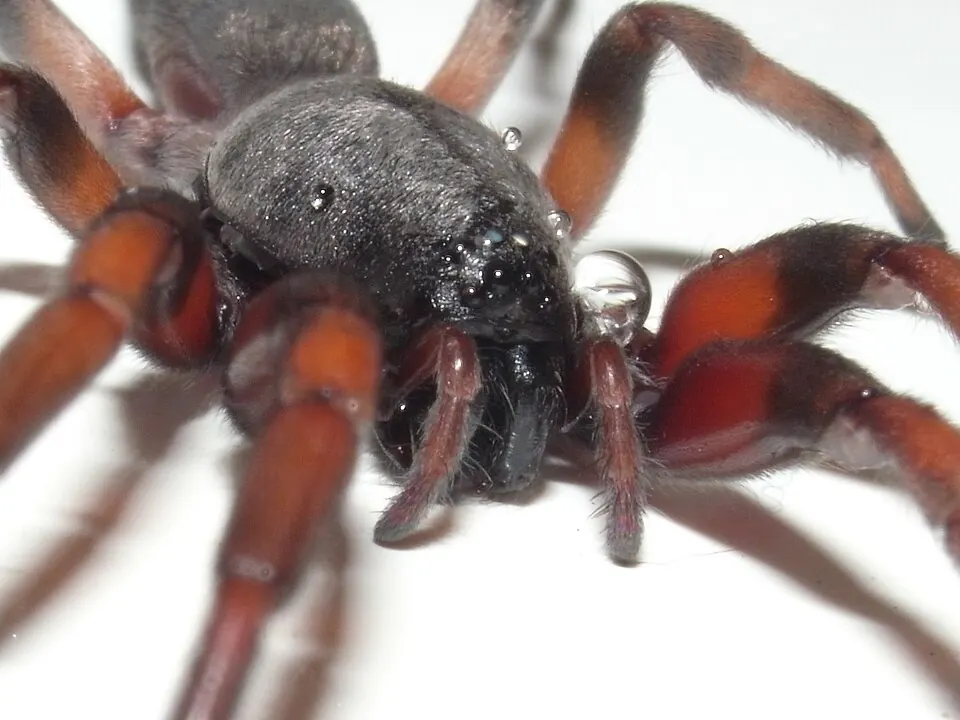 Painful but usually not life-threateningWhite-tailed spiderDark, cigar-shaped wandering spider with a pale spot at the tip of the abdomen, often seen indoors at night.
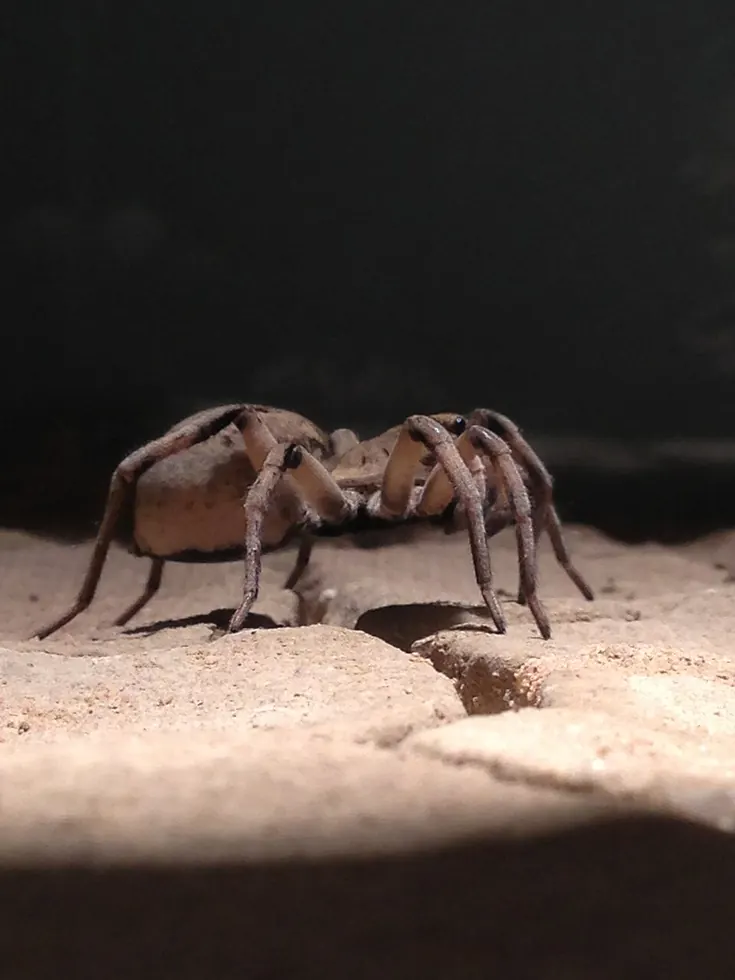 Painful but usually not life-threateningWolf spiderFast ground-running hunter, often mottled brown or grey, sometimes carrying an egg sac or spiderlings.Usually low riskGarden orb-weaverRound-bodied spider that builds classic circular orb webs in gardens, especially at night.
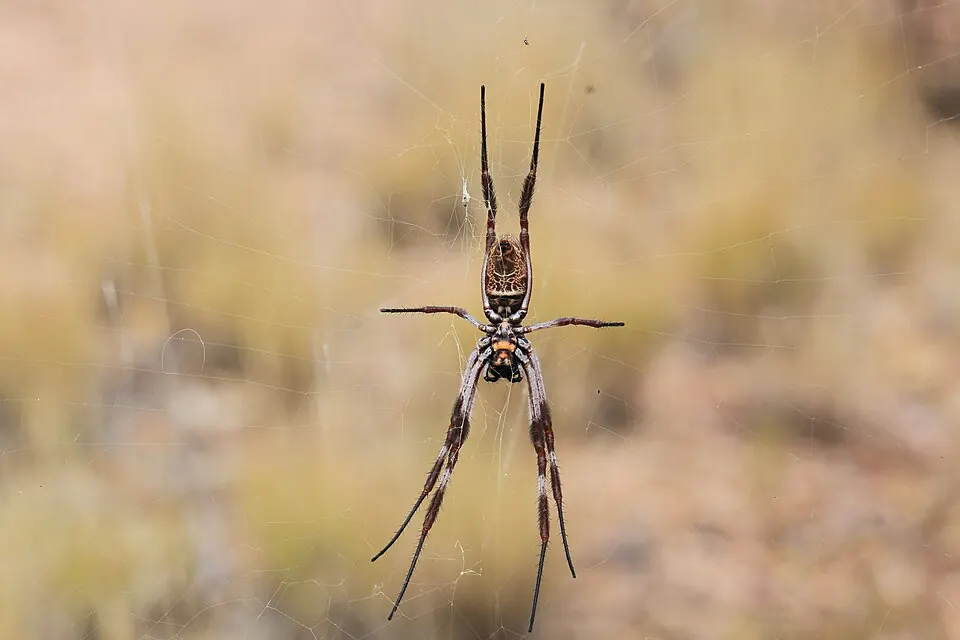 Usually low riskGolden orb-weaverLarge web-building spider with golden silk and long legs, often in warm Australian gardens and bushland.
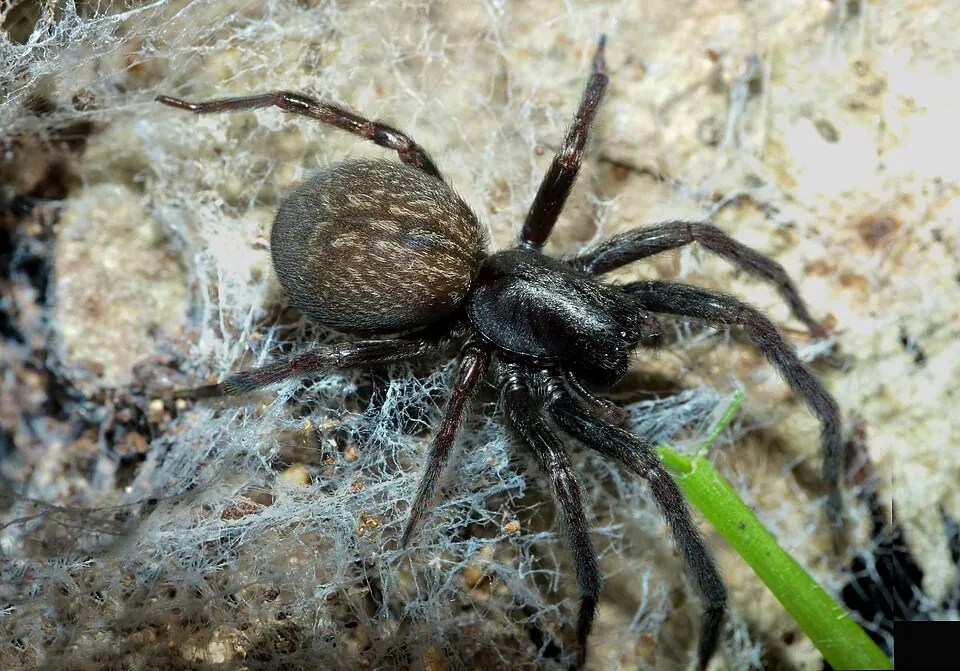 Usually low riskBlack house spiderDark, sturdy house spider that builds messy lace-like webs around windows, walls, fences and crevices.
Questions people ask
Spider identifier Australia FAQ
How does the spider identifier work?
The identifier asks four simple questions: where you are in Australia, how big the spider looked, what colours or markings stood out, and where you found it. It then compares those clues with Australian spider profiles and shows likely matches.
Can this identify a spider by picture?
The site includes a limited photo clue beta that can scan a compressed image to narrow likely matches, but it does not confirm a species or diagnose a bite. A picture is still most useful when you also answer the location, size, colour and web or hiding-place questions.
What should I do first if I found a spider in my house?
Keep a safe distance, do not handle the spider, and note where it was found. If nobody has been bitten, use the identifier to compare likely matches. If someone has been bitten or feels unwell, prioritise medical or poisons advice.
When should I call 13 11 26 or 000?
Call 000 for severe symptoms, breathing trouble, collapse, or suspected funnel-web or mouse spider bite. Call the Poisons Information Centre on 13 11 26 for poisons advice from anywhere in Australia.
Home screen app
Use Spider Identifier like an app
Install it on your phone, tablet or desktop so it opens from your home screen or dock.
- Open this page in your browser.
- Use the browser menu to add it to your home screen, dock or apps.
- Open Spider Identifier from the new icon.
Photography credits
- Sydney funnel-web spider: Rosie Steinberg · CC BY 4.0
- Australian funnel-web spiders: Sputniktilt · CC BY-SA 3.0
- Redback spider: Don Horne · CC BY 4.0
- Mouse spider: Peripitus · CC BY-SA 3.0
- White-tailed spider: Sylke Rohrlach · CC BY-SA 4.0
- Black house spider: steve_kerr · CC BY 4.0
- Brown house spider / cupboard spider: Esin Üstün from Istanbul, Turkey · CC BY 2.0
- Huntsman spider: iNaturalist Australia user: tjeales · CC BY-SA 4.0
- Badge huntsman spider: Graham Winterflood · CC BY-SA 4.0
- Wolf spider: Canley · CC BY-SA 3.0
- Trapdoor spider: Johan C.G. Fagerholm · CC BY 3.0
- Sydney brown trapdoor spider: Johan C.G. Fagerholm · CC BY 3.0
- Melbourne trapdoor spider: Elias Freyhof · CC BY 4.0
- Victorian funnel-web spider: Museums Victoria / Benjamin Healley · CC BY 4.0
- Garden orb-weaver: Thennicke · CC BY-SA 4.0
- Golden orb-weaver: Stu's Images · CC BY-SA 4.0
- Humped golden orb-weaving spider: Richard Fuller · CC0
- St Andrew’s cross spider: Stu's Images · CC BY-SA 4.0
- Net-casting spider: Stu's Images · CC BY-SA 4.0
- Rufous net-casting spider: Stu's Images · CC BY-SA 3.0
- Jumping spider: DavidFrancis34 from Australia · CC BY-SA 2.0
- Daddy-long-legs spider: Didier Descouens · CC BY-SA 4.0
- Yellow sac spider: Austin Campbell · CC BY-SA 4.0
- Flower spider / crab spider: James Niland from Brisbane, Australia · CC BY 2.0
- Bird-dropping spider: Wikimedia Commons contributor · CC BY-SA 3.0
- Spiny spider: John Manger, CSIRO · CC BY 3.0
- Long-jawed orb-weaver: Didier Descouens · CC BY-SA 4.0
- Blue Mountains funnel-web spider: Sputniktilt · CC BY-SA 3.0
- Northern tree funnel-web spider: Toby Hudson · CC BY-SA 3.0 au
- Southern tree funnel-web spider: Alan Couch · CC BY 2.0
- Darling Downs funnel-web spider: Ethan Yeoman · CC BY 4.0
- Port Macquarie funnel-web spider: Sputniktilt · CC BY-SA 3.0
- Red-headed mouse spider: insiderelic · CC0
- Eastern mouse spider: Max Campbell · CC BY 4.0
- Wishbone spider: Tony Eales · CC BY-SA 4.0
- Curtain-web spider: Rodrigo · CC BY-SA 4.0
- Brush-footed trapdoor spider: Toby Hudson · CC BY-SA 3.0 au
- Two-tailed spider: Vengolis · CC BY-SA 4.0
- Grey house spider: Don Horne · CC BY 4.0
- Social huntsman spider: Bryce McQuillan · CC BY-SA 2.0
- Lichen huntsman spider: Vinayaraj · CC BY-SA 4.0
- Green huntsman spider: SavTheNeutrinoGuy · CC BY 4.0
- Nursery web spider: Fir0002 · GFDL 1.2
- Fishing spider: Rolf Lawrenz · CC BY 4.0
- Clever fishing spider: Andrew Townsend · CC BY 4.0
- Green jumping spider: Ian Sutton from Collinsville and Oberon, Australia · CC BY 2.0
- Sea-green northern jumper: tjeales · CC BY-SA 4.0
- Garden jumping spider: gailhampshire from Cradley, Malvern, U.K · CC BY 2.0
- Sparkling northern jumping spider: Summerdrought · CC BY-SA 4.0
- Peacock spider: Octavius Pickard-Cambridge · Public domain
- Coastal peacock spider: Jean and Fred Hort · CC BY 2.0
- Ant-mimic spider: Vengolis · CC BY-SA 4.0
- Lynx spider: Vengolis · CC BY-SA 4.0
- Elegant lynx spider: Graham Wise from Brisbane, Australia · CC BY 2.0
- Wrap-around spider: Bernard DUPONT from FRANCE · CC BY-SA 2.0
- Leaf-curling spider: Mjoyce · CC BY-SA 4.0
- Magnificent spider: tjeales · CC BY-SA 4.0
- Jewel spider: The original uploader was Fir0002 at English Wikipedia. · CC BY-SA 3.0
- Tent-web spider: arian.suresh from Chennai, India · CC BY 2.0
- Dome tent-web spider: Steve Fitzgerald · CC BY-SA 4.0
- Silver orb-weaver: Stu's Images · CC BY-SA 4.0
- Bolas spider: LOPEZ André · CC BY-SA 4.0
- Swift ground spider: Keta · CC BY-SA 2.5
- Orange-legged swift spider: Donald Hobern from Copenhagen, Denmark · CC BY 2.0
- Red and black spider: Donald Hobern from Copenhagen, Denmark · CC BY 2.0
- Australian tarantula / whistling spider: Toby Hudson · CC BY-SA 3.0 au
- Scorpion-tailed spider: Biggles · Public domain
- Mirror spider: Nigel Main · CC BY 4.0
- Triangular spider: iNaturalist Australia user: wendy_moore · CC BY 4.0
- Spitting spider: André Karwath aka Aka · CC BY-SA 2.5
- Tube-dwelling spider: Marsh et al. (2022). · CC BY 4.0
- Slater-eating spider / woodlouse hunter: WanderingMogwai · CC BY-SA 4.0
- Flattened bark spider: Jon Sullivan from Christchurch, New Zealand · CC BY-SA 2.0
- Common house spider: Don Horne · CC BY 4.0
- White porch spider: Don Horne · CC BY 4.0
- Diamond comb-footed spider: Caroline Harding, MPI · CC BY 3.0 au
- Two-spined spider: Don Horne · CC BY 4.0
- Heroic orb-weaver / lichen spider: Don Horne · CC BY 4.0
- Enamelled spider / Bradley’s grass orb-weaver: Poyt448 Peter Woodard · Public domain
- White flower spider / spectacular crab spider: Graham Wise from Brisbane, Australia · CC BY 2.0
- Pink flower spider / green crab spider: Graham Wise from Brisbane, Australia · CC BY 2.0
- Three-lobed spider: Don Horne · CC BY 4.0
- Ninja-star ceiling spider: JF · CC BY 4.0
- Red house spider: Tiago Lubiana · CC0
- Wall spider / baseboard spider: Paul venter · CC BY-SA 3.0
- Fringed jumping spider: Donald Hobern from Copenhagen, Denmark · CC BY 2.0
- Giant bark jumping spider: P.D. Amara · CC0
- Superb jumping spider: tobyyy · CC BY-SA 4.0
- Tasmanian cave spider: Marshal Hedin from San Diego, USA · CC BY-SA 2.0
- Banded garden spider: gailhampshire from Cradley, Malvern, U.K · CC BY 2.0
- Sombrero spider / sheetweb spider: Toby Hudson · CC BY-SA 3.0 au
- Red-tipped square-ended crab spider: Poyt448 Peter Woodard · CC0
- Trapezoid crab spider / trapezium crab spider: Christopher Stephens · CC BY-SA 4.0
- Banded huntsman spider: Jackson Nugent · CC BY 2.0
- Tropical St Andrew’s cross spider: Krigore · CC BY-SA 4.0
- Painted cross spider: Graham Winterflood · CC BY-SA 2.0
- Common peacock spider: Jean and Fred Hort from Perth, Australia · CC BY 2.0
- Banksia peacock spider: Candalides01 · CC BY-SA 4.0
- Bronze Aussie jumping spider: Don Horne · CC BY 4.0
- Golden-thighed brushed jumping spider: Joseph Schubert · CC BY 4.0
- White-banded house jumping spider: Great Ocean Road Coast Committee (iNaturalist user: gorcc_enviroed) · CC0
- Little striped wolf spider: Ethan Yeoman · CC BY 4.0
- Garden wolf spider: R1SloMo · CC BY-SA 4.0
- Knobbly crab spider: James Niland from Brisbane, Australia · CC BY 2.0
- Dewdrop spider: Quartl · CC BY-SA 3.0
- Sooty orb-weaver: Carey-Knox-Southern-Scales · CC0
- Knobbled garden orb-weaver: Migodar · CC BY-SA 4.0
- Nemo peacock spider: Schubert J (2021) Maratus nemo: A new wetland species of peacock spider from South Australia (Araneae, Salticidae, Euophryini). Evolutionary Systematics 5(1): 71-80. https://doi.org/10.3897/evolsyst.5.64922 · CC BY 4.0
- Hackled orb-weaver: iNaturalist.org (Claudia Schipp) (Claudia Schipp) · CC0
- Wrapped-up twig spider: Graham Wise from Brisbane, Australia · CC BY 2.0
- Tasmanian peacock spider: Shane Walker · CC BY 4.0
- Newcastle funnel-web spider: Rosie Steinberg · CC BY 4.0
- Illawarra funnel-web spider: Alan Couch · CC BY 2.0
- Border Ranges funnel-web spider: Sputniktilt · CC BY-SA 3.0
- Black wishbone spider: Tony Eales · CC BY-SA 4.0
- Northern wishbone spider: Tony Eales · CC BY-SA 4.0
- Grey huntsman spider: iNaturalist Australia user: tjeales · CC BY-SA 4.0
- Brown huntsman spider: iNaturalist Australia user: tjeales · CC BY-SA 4.0
- Prowling spider: Austin Campbell · CC BY-SA 4.0
- Spotted ground spider: Keta · CC BY-SA 2.5
- Ant-eating spider: Vengolis · CC BY-SA 4.0
- Brown widow spider: Don Horne · CC BY 4.0
- Whip spider: Didier Descouens · CC BY-SA 4.0
- Signal-line spider: Thennicke · CC BY-SA 4.0
- Bird-lime spider: LOPEZ André · CC BY-SA 4.0
- Eastern peacock spider: Octavius Pickard-Cambridge · Public domain
- Blue-faced peacock spider: Octavius Pickard-Cambridge · Public domain
- Flying peacock spider: Octavius Pickard-Cambridge · Public domain
- Jovial jumping spider: gailhampshire from Cradley, Malvern, U.K · CC BY 2.0
- Pale eastern jumping spider: gailhampshire from Cradley, Malvern, U.K · CC BY 2.0
- Golden-tail jumper: gailhampshire from Cradley, Malvern, U.K · CC BY 2.0
- Severe jumping spider: DavidFrancis34 from Australia · CC BY-SA 2.0
- Squat bark jumping spider: P.D. Amara · CC0
- Rainbow peacock spider: Octavius Pickard-Cambridge · Public domain
- Blue-dot peacock spider: Octavius Pickard-Cambridge · Public domain
- Owl peacock spider: Octavius Pickard-Cambridge · Public domain
- Slender crab spider: Christopher Stephens · CC BY-SA 4.0
- Green crab spider: Graham Wise from Brisbane, Australia · CC BY 2.0
- Flat rock spider: Jon Sullivan from Christchurch, New Zealand · CC BY-SA 2.0
- Long-spinneret ground spider: Keta · CC BY-SA 2.5
- Edible golden orb-weaver: Stu's Images · CC BY-SA 4.0
- Panther hackled orb-weaver: iNaturalist.org (Claudia Schipp) (Claudia Schipp) · CC0
- Australian Union-Jack wolf spider: Canley · CC BY-SA 3.0
- Grey wolf spider: Canley · CC BY-SA 3.0
- Perth forest wolf spider: Canley · CC BY-SA 3.0
- Southern Sydney funnel-web spider: Rosie Steinberg · CC BY 4.0
- Spotted trapdoor spider: Johan C.G. Fagerholm · CC BY 3.0
- Adelaide trapdoor spider: Johan C.G. Fagerholm · CC BY 3.0
- Northern mouse spider: Peripitus · CC BY-SA 3.0
- Intertidal marine spider: Rolf Lawrenz · CC BY 4.0
- Foliage-webbing social spider: Bryce McQuillan · CC BY-SA 2.0
- Golden huntsman spider: Graham Winterflood · CC BY-SA 4.0
- Jungle huntsman spider: iNaturalist Australia user: tjeales · CC BY-SA 4.0
- Victorian huntsman spider: iNaturalist Australia user: tjeales · CC BY-SA 4.0
- Running crab spider: Christopher Stephens · CC BY-SA 4.0
- Australian flattie spider: Jon Sullivan from Christchurch, New Zealand · CC BY-SA 2.0
- Pill flower spider: James Niland from Brisbane, Australia · CC BY 2.0
- Tasmanian funnel-web spider: Sputniktilt · CC BY-SA 3.0
- Adelaide funnel-web spider: Sputniktilt · CC BY-SA 3.0
- Nadgee funnel-web spider: Sputniktilt · CC BY-SA 3.0
- Cape tangle-web spider: Esin Üstün from Istanbul, Turkey · CC BY 2.0
- Ant-eating comb-footed spider: Caroline Harding, MPI · CC BY 3.0 au


.jpg)
_-_Flickr_-_4017amara.png)

_(33172803135).jpg)
_-_Flickr_-_gailhampshire.jpg)


.jpg)


See our other site
Exploring Australian wildlife? Visit Snake Identifier for our Australian snake guide.