Australian spider questions
A Spider Landed on Me or Crawled on Me: What Should I Do?
A calm Australian guide for spiders on jackets, clothing, seats or skin, with safe removal, identification clues, bite boundaries and pet-safety cautions.
Quick answer
Start here
If a spider lands on you or crawls onto your clothing, stay still for a moment, brush or flick it away gently if you can do that safely, then step back and check whether anyone was bitten. Do not grab, squeeze or trap an unknown spider against skin. Once it is off you, photograph it from a safe distance with the location, clothing item or seat included for context.
Useful clues
What to do first
For body-contact encounters, the first job is safe separation. Identification comes after the spider is no longer on you.
On a jacket, shirt or bag
Keep the clothing away from your body, shake it out outdoors if practical, then photograph the spider after it drops clear. Do not press the fabric against skin.
On bare skin
Use a gentle brush-off motion rather than slapping or grabbing. A trapped spider is more likely to bite than one that can move away.
On public transport or in a workplace
Move calmly, warn nearby people, and prioritise safe footing and traffic or machinery awareness before trying for a photo.
In towels, shoes, bedding or laundry
Museums Victoria and Better Health guidance both support checking or shaking out clothing, shoes and bedding where spiders may hide.
Practical steps
After the spider is off you
- Get the spider off you without bare-hand handling, squeezing or trapping it against your skin.
- If you are driving, cycling, working at height or near machinery, stop the activity safely before dealing with the spider.
- Check for a bite mark, pain, sweating, nausea, breathing trouble or other symptoms, but do not wait for perfect identification if symptoms are serious.
- Take a safe context photo once the spider is away from your body: clothing, seat, bag, web, wall, garden edge, bus seat or workplace surface can all help.
- Shake out clothing, shoes, towels or bedding before reuse if the spider disappeared into fabric.
- If a pet may have mouthed or been bitten by a spider, especially a redback, contact a vet or animal poisons service promptly.
Do not trap it against your skin
A spider that is squeezed inside clothing, under a sleeve or against a seat has less room to escape. Brush it away, remove the outer garment if practical, or step aside and shake the item out instead of pinching the spider through fabric.
Clothing and shoe checks are sensible
Museums Victoria notes that white-tailed spiders can hide inside houses during the day, including in beds and clothing. Better Health Channel also recommends shaking out shoes and clothing that have been left on the floor or outside.
Common body-contact candidates
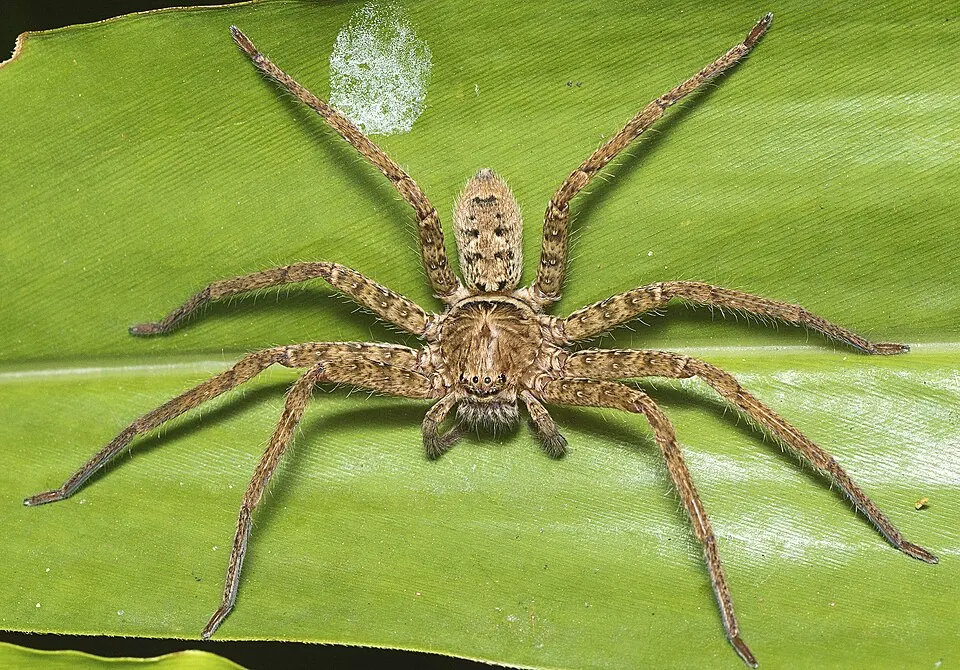
Large huntsmans can drop from walls, cars, curtains, outdoor furniture or work gear. Jumping spiders may hop onto clothing or bags. White-tailed spiders are wandering hunters that may turn up around clothing, towels, bedding and laundries. A ground or web spider can also be accidentally picked up on fabric.
Photo clues that help later
Once the spider is away from skin, take a whole-body photo and one wider context photo. Include the state or suburb-level location, the surface it came from, whether it was in a web, and whether the encounter was indoors, in a vehicle, outside, on a bus, or at work.
When bite care matters more than identification
Healthdirect and ANZCOR guidance prioritises urgent care for suspected funnel-web or mouse spider bites, severe symptoms, or a person who becomes unwell. Pressure immobilisation is for suspected funnel-web or mouse spider bites, not every spider contact.
Pet-safety boundary
If a pet chases, mouths or paws at a spider, do not assume the risk is the same as for a person. Animal Poisons Helpline treats redback exposure as especially serious for cats and guinea pigs. Call a vet or poisons service if a pet seems painful, restless, weak, vomiting or otherwise unwell after spider contact.
Profiles to compare
Open the closest spider profiles
Use these pages to compare body shape, movement, markings, habitat and safety notes after the immediate contact moment is over.
Related questions
Use the next clue
If the spider was in a car, compare this with the car-spider removal guide. If it was inside the house, the house-spider danger guide can help with risk triage. For better photos, use the spider photo guide.
Common questions
A Spider Landed on Me or Crawled on Me: What Should I Do? FAQ
Should I panic if a spider crawls on me?
No. Most contact encounters end without a bite. Stay calm, get the spider off without squeezing it, then check for symptoms.
Can I identify a spider from the fact it landed on me?
Not reliably. The useful clues are the spider's shape, size, markings, location, nearby web or hiding place, and where it came from.
What should I do if I was bitten?
Follow Australian spider-bite advice. Call 000 for severe symptoms or a suspected funnel-web or mouse spider bite, and call 13 11 26 or a health professional when symptoms are worrying.
Should I keep the spider for identification?
Only if it can be captured without risk. A safe photo is usually better than trying to hold or squash an unknown spider.
What if my dog or cat found the spider first?
Keep the pet away and call a vet or Animal Poisons Helpline if the pet seems unwell or if redback exposure is possible. Redback bites are a particular concern for cats and guinea pigs.
Identification is not medical or veterinary advice
This guide explains spider identification clues and safer contact handling only. If a bite has occurred, or a person or pet seems unwell, follow Australian health or veterinary advice and seek urgent help for serious symptoms.