
Australian spider questions
Is This a White-Tailed Spider in My Bathroom or Laundry?
A myth-aware indoor guide for white-tailed spider worries in bathrooms, laundries, towels and clothing.
Quick answer
Start here
A white-tailed spider is usually an active wandering spider with a dark, cigar-shaped body and a pale spot near the tip of the abdomen. Bathrooms, laundries, towels and clothing are common worry zones, but a white-tail guess should still be checked against body shape and markings.
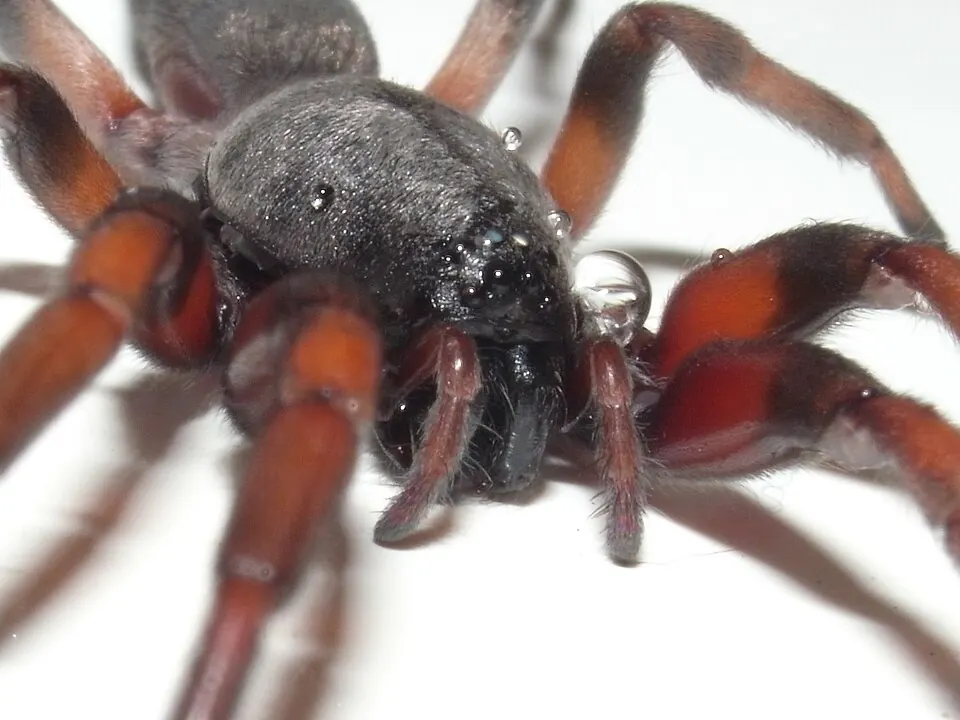
Useful clues
What to compare first
These clues are designed to support the spider profiles, not replace them.
White-tail clue
Long dark body, pale tail spot, active wandering behaviour and no capture web.
Common mix-up
Dark house spiders, swift ground spiders and young spiders can trigger the same first reaction.
Bite boundary
Australian health guidance does not support the common skin-ulcer myth, but worsening symptoms still need medical advice.
Practical steps
What to do next
- Look for the pale tail spot and long body shape.
- Check whether it was wandering rather than sitting in a web.
- Shake out towels, clothes and bedding in affected rooms.
- Reduce prey webs nearby; white-tailed spiders hunt other spiders.
Start with tail mark, body shape and room
Bathroom and laundry white-tail questions usually come down to a few observable details: a long dark body, a pale mark near the tail end, wandering behaviour, and no capture web. Note whether the spider was on a wall, in a towel, near clothing, beside an existing web, or moving across the floor, because those details help separate a white-tailed spider from common indoor lookalikes.
Separate white-tails from house and ground spiders
A white-tailed spider clue-set is a long dark body, a pale tail-end mark, active wandering and no capture web. A house-spider or ground-spider clue-set may include a fixed web, a different body shape, or behaviour tied to corners, skirting boards or floor-level hiding spots. One close crop rarely settles the question; the useful test is which detail would change the comparison.
Check the whole white-tail clue set
The useful question is whether the spider matches the whole white-tail clue-set: long dark body, pale tail-end mark, wandering behaviour and no capture web. A fixed web, a broader house-spider body, or floor-level ground-spider movement should keep other comparisons open. If a bite or worsening symptoms are involved, health advice matters more than a perfect ID.
Common mistakes to avoid
Do not identify from colour alone, do not handle the spider to get a better photograph, and do not treat a Reddit-style guess as a safety decision. Bite boundary: Australian health guidance does not support the common skin-ulcer myth, but worsening symptoms still need medical advice. When the situation involves a bite, a child, a pet, or a spider that might be medically significant, the sensible next step is health or veterinary advice rather than a more confident online label.
How to use the linked profiles
Use the linked profiles as a comparison set, not as a forced answer. Start with white tailed spider, black house spider, swift ground spider, then check body shape, web or hiding place, region, size and the notes on what to check next. If one clue does not fit, keep the comparison open instead of trying to make the spider match a favourite guess.
What a better photo or note would include
A helpful record does not need to be dramatic. One clear photo of the spider, one wider photo of the place it was found, an approximate size, the Australian state or region, and a note about web or movement will usually beat a single extreme close-up. If the spider is in a risky spot, take the wider photo first and keep distance.
Why the answer may stay uncertain
Some spider groups overlap in colour, size and posture, especially in phone photos. Juveniles, males away from webs, poor lighting and damaged webs can all hide the best clues. A good guide should give a practical shortlist and explain the next clue to check, not pretend every photo can be pushed to species level.
A practical next move
Reduce prey webs nearby; white-tailed spiders hunt other spiders. If nobody has been bitten, this is usually a calm observation problem: take a safer photo, note the state or region, and compare the closest profiles. If a bite has happened or someone feels unwell, identification becomes secondary to first aid and professional advice.
Reduce towel, clothing and prey-web encounters
For indoor or household encounters, reduce clutter around stored items, shake out towels or shoes when the question involves clothing, and keep outdoor lights, sheds and window frames in mind because they attract insects and the spiders that hunt them. For garden encounters, gloves, a torch and a no-poking rule are simple habits that keep identification safer.
Profiles to compare
Open the closest spider profiles
Use these pages to compare shape, web, habitat, range and safety notes.
Common questions
Is This a White-Tailed Spider in My Bathroom or Laundry? FAQ
Are white-tailed spiders dangerous?
They can bite and cause local symptoms, but they are not considered dangerous in the way funnel-web spiders are.
Does every mysterious sore mean white-tail bite?
No. Do not diagnose a wound from spider suspicion alone; get medical advice for concerning skin symptoms.
Should I leave it in the bathroom?
Most people prefer to remove indoor wanderers with a container and card if it is safe to do so.
Sources used
- Australian Museum spider information
- Australian Museum funnel-web spiders
- Australian Museum black house spider
- Australian Museum white-tailed spider
- Australian Museum huntsman spiders
- Australian Museum mouse spiders
- healthdirect spider bites
- Better Health Channel spider first aid
- Australian Museum huntsman spiders
- Queensland Museum arachnology collection
- Western Australian Museum arachnids overview
Identification is not medical advice
This guide helps with spider identification clues only. If a bite has occurred, or a person or pet seems unwell, follow Australian health or veterinary advice and seek urgent help for serious symptoms.