Australian spider questions
I Found an Injured Huntsman. Should I Help?
A cautious Australian guide to missing legs, weak movement and motionless huntsmans—when to observe, relocate or leave the spider alone.
Quick answer
Start here
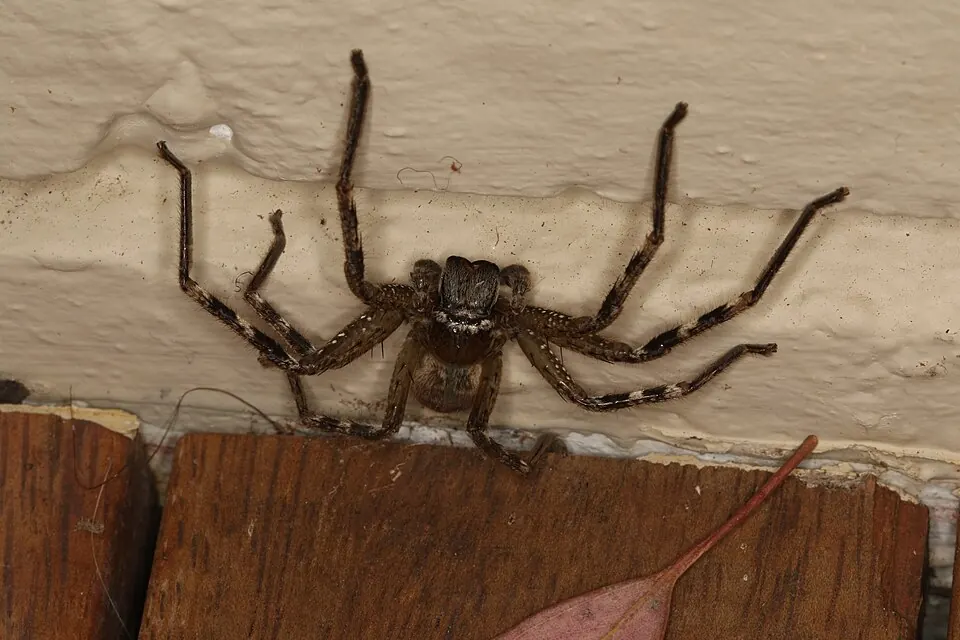
If a huntsman is missing one or two legs but can still stand, move and shelter, it may need nothing from you. Keep pets and people away, avoid feeding or touching it, and give it a quiet escape route. If it is trapped in a sink, window gap or exposed indoor position, use a wide container and card for a short, gentle relocation to nearby sheltered bark or vegetation.
Useful clues
Read the situation first
Missing legs but moving
Spiders can rapidly adjust their gait after limb loss. A juvenile may regenerate part or all of a leg during later moults, but an adult may have no moults remaining.
Still for hours
Huntsmans are nocturnal and often rest through daylight. Stillness alone does not prove injury, illness or death.
Tightly curled or unable to stand
This can indicate severe injury, dehydration or death, but posture is not a safe handling test. Observe without poking.
Trapped or exposed
A dry bathtub, sealed window gap, hot surface or busy floor may justify careful contained relocation if it can be done safely.
Practical steps
What to do next
- Watch from a distance and note whether the spider changes position over several hours.
- Check for an obvious trap such as a smooth sink, closed flyscreen cavity, adhesive surface or direct heat.
- Keep cats, dogs and children away; do not test movement with your hand.
- If relocation is genuinely needed, use a large clear container and rigid card rather than bare hands.
- Release near bark, a tree trunk, fence gap or sheltered vegetation, away from foot traffic.
- If a person may have been bitten, stop focusing on the spider and follow Australian medical guidance.
A missing leg is not automatically an emergency
Leg loss is common enough in wild spiders to have a name—autotomy when a spider deliberately sheds a trapped or damaged limb. Experimental research shows spiders can alter their stance and gait quickly after losing legs. That does not mean every injury is minor, but a mobile huntsman is often better served by space and shelter than improvised captivity.
Regrowth depends on future moults
Spiders grow by moulting. Juveniles that still have moults ahead may regenerate lost limb tissue, sometimes over more than one moult. Mature spiders do not keep moulting indefinitely, so a missing adult leg may remain missing. Avoid promising that every huntsman will regrow every leg.
Do not turn a wild encounter into home treatment
Water droplets, forced feeding and small ventilated containers are frequently suggested online, but they can add stress, drowning risk or escape risk and are difficult to manage without species and life-stage knowledge. This article is about safe encounter decisions, not keeping or rehabilitating wild spiders.
When a small intervention makes sense
A huntsman on a quiet exterior wall or beneath bark should usually be left alone. A spider stuck in a smooth bath, trapped behind a flyscreen during renovation or exposed to pets may benefit from one calm container-and-card move. Minimise handling time and match the release place to its normal sheltered lifestyle.
Separate spider welfare from bite care
An injured-looking spider is still capable of sudden movement and biting when trapped. Do not touch it to judge whether it is alive. If a bite or serious symptoms are possible, prioritise healthdirect advice and emergency care over capture or identification.
Profiles to compare
Open the closest spider profiles
Common questions
I Found an Injured Huntsman. Should I Help? FAQ
Can a huntsman live with missing legs?
Many can remain mobile with one or more missing legs, although the effect depends on which legs were lost and the spider's overall condition.
Will its legs grow back?
A juvenile may regenerate limbs through later moults. An adult that has finished moulting may not.
Should I feed an injured huntsman?
No routine feeding is needed for a brief wild encounter. Give it space or relocate it once if it is trapped.
What if it has not moved for three days?
Check from a distance for posture changes, a shed skin or entrapment. Do not touch it; relocation is reasonable only if it can be done safely.
Who treats an injured spider?
Wild-spider rehabilitation options are limited and vary locally. A museum can help with identification, while wildlife services can advise whether they accept invertebrates.
Identification is not medical advice
If a bite has occurred or someone seems unwell, follow Australian health advice and seek urgent help for serious symptoms.