Australian spider questions
Why Does This Spider Look So Flat? Bark, Wall and Huntsman Lookalikes in Australia
A practical Australian guide to flat-looking spiders on bark, walls, firewood and indoor surfaces, with huntsman, flattened bark spider, wall spider and jumping-spider clues.
Quick answer
Start here
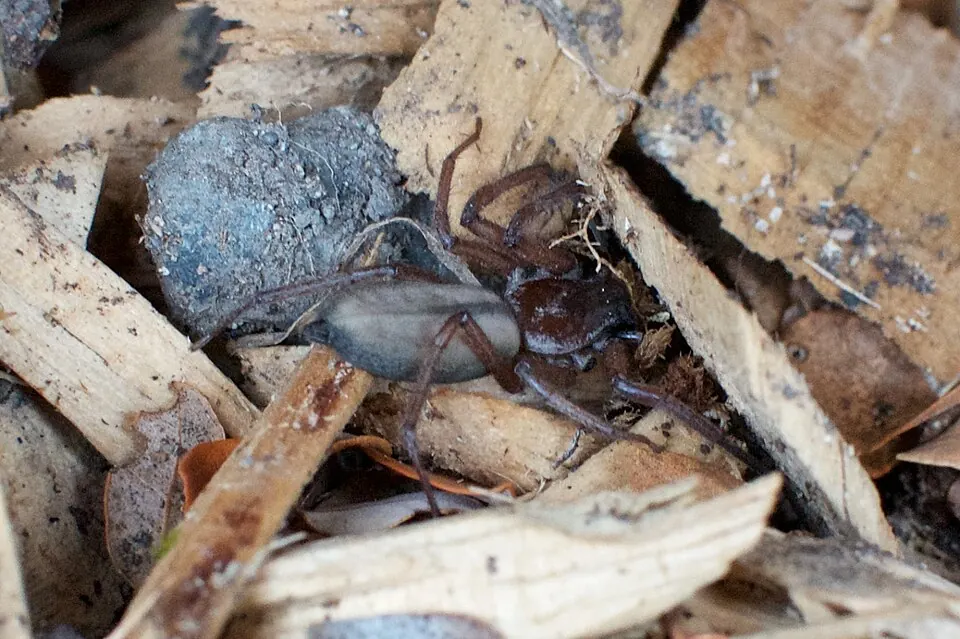
A flat-looking spider in Australia is often flat because that body shape helps it hide in tight spaces such as loose bark, rock crevices, fence gaps, wall edges or narrow indoor corners. The first shortlist is flattened bark spiders, huntsmans, tiny wall spiders, under-bark jumping spiders and bark-camouflaged orb-weavers. Use the setting, size, leg posture and movement before guessing from flatness alone.
Useful clues
What to compare first
Flatness is a useful clue, but it needs the surface, size and posture beside it.
Found under bark, timber or firewood
Flattened bark spiders and some huntsmans are strong comparisons. Photograph the surface it came from and avoid handling firewood or bark with bare fingers.
Large, leggy and sideways on a wall
Huntsmans often look very flat, with legs spread sideways and a fast crab-like run across walls, ceilings, bark or car interiors.
Tiny on a wall, skirting board or bathroom tile
A very small flat-looking spider may be a wall spider or small jumping spider rather than a baby huntsman.
Still and camouflaged on bark or a twig
Some orb-weavers and bark-associated spiders flatten or press against the surface by day, then become more obvious at night.
Practical steps
What to do next
- Take one wider photo showing bark, wall, firewood, window frame, skirting board, fence or plant stem.
- Estimate size without putting your hand near the spider; a coin or container edge in the same photo is safer.
- Look at leg posture: huntsman legs spread sideways, jumping spiders look compact with large front-facing eyes, and wall spiders are usually tiny.
- Do not pry under bark or poke a crevice to force the spider out for a better photo.
- If a bite has occurred or symptoms are concerning, use Australian bite advice rather than waiting for species-level certainty.
Why flatness helps spiders survive
Australian Museum material on huntsmans and ground spiders describes flat bodies as useful for narrow spaces under bark, rocks and crevices. That is why a spider on firewood, bark, fence gaps or wall edges can look much flatter than a spider sitting openly in a web.
Flat huntsman clues
For a large spider, look for a broad leg span, sideways-splayed legs, quick running and a wall, ceiling, bark, log, shed or car setting. Social, lichen and other huntsmans can be especially bark-associated, but a photo still needs size and location.
Flattened bark spider clues
A true flattened bark spider is usually a low, brown-grey hunter associated with bark, rocks, logs and tight outdoor shelter. It may look as though it has been squashed even when it is perfectly healthy.
Tiny wall and jumping-spider lookalikes
If the spider is only a few millimetres long on a wall, skirting board or bathroom tile, do not scale it up in your imagination. Tiny wall spiders and compact jumping spiders can look flat in phone photos, while jumping spiders are better checked by the large front-facing eyes and stop-start movement.
When to be cautious
Do not handle unknown spiders, pry under bark with bare hands, or poke crevices. Flat-looking spiders are not automatically dangerous, but bite care depends on symptoms and the suspected spider group, not on a confident internet label.
Pet and household boundary
If the spider is in bedding, clothing, a child’s room, pet bedding or firewood being brought inside, relocation is usually more practical than leaving it there. Use a container and card if it can be done safely, or get help rather than handling it.
Profiles to compare
Open the closest spider profiles
Use these pages to compare shape, web, habitat, range and safety notes.
Common questions
Why Does This Spider Look So Flat? Bark, Wall and Huntsman Lookalikes in Australia FAQ
Is a flat spider in Australia dangerous?
Flat shape alone does not mean dangerous. Use location, body shape, web or hiding place, and bite symptoms. Seek medical advice for concerning bites or symptoms.
Is every flat spider a huntsman?
No. Huntsmans are common flat-looking spiders, but flattened bark spiders, wall spiders, jumping spiders and bark-camouflaged orb-weavers can also look flat.
Why do some spiders flatten against bark?
For many bark and crevice spiders, a flattened body helps them fit into narrow shelters and blend with bark, rocks or timber.
Should I release a flat spider from firewood or indoors?
If it can be moved safely, use a container and card and release it near sheltered outdoor cover. Do not handle an unknown spider with bare hands.
Sources used
- Australian Museum: Huntsman Spiders
- Australian Museum: Ground Spiders
- Museums Victoria: Delena cancerides, Social Huntsman
- Australian Museum: Huntsman Spiders
- Records of the Australian Museum: Holoplatys jumping spiders
- healthdirect: Spider bites
- Better Health Channel: Spiders
- ANZCOR Guideline 9.4.2: First Aid Management of Spider Bite
Identification is not medical advice
This guide helps with spider identification clues only. If a bite has occurred, or a person or pet seems unwell, follow Australian health or veterinary advice and seek urgent help for serious symptoms.