
Australian spider questions
Why Has My Orb-Weaver Stopped Making a Web? Seasonal Spider Behaviour in Australia
A practical Australian guide to missing orb-weaver webs, ageing spiders, seasonal web changes and when a spider may simply be resting nearby.
Quick answer
Start here
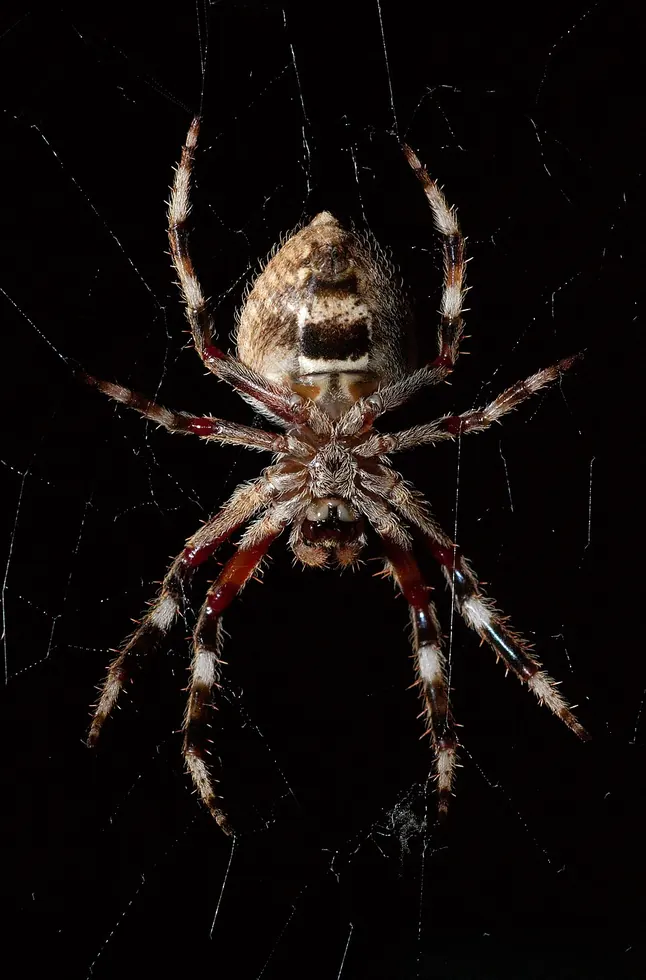
An orb-weaver that has stopped making its usual web is not automatically sick or dead. In Australia, many garden orb-weavers build a fresh orb web at dusk and recycle or take it down by dawn, while golden orb-weavers keep more permanent webs. Missing webs can reflect normal night-day timing, weather damage, disturbance, prey changes, moulting, ageing after breeding season, or the spider resting in a nearby daytime retreat.
Useful clues
What to compare first
Start with timing, species group and disturbance before assuming the spider is unwell.
The web is gone in the morning
For many garden orb-weavers, this can be normal. They may build the web at dusk, feed at night, then take it down or recycle silk by dawn.
The spider is still nearby
Check leaves, twigs, bark, eaves, railings and curled leaves near the old web line. Some orb-weavers hide by day and return to web-building at night.
The web is damaged and unrepaired
Wind, rain, pruning, lights going off, fewer flying insects or repeated disturbance can make the site less useful for catching prey.
It is late summer or autumn
Some adult female orb-weavers decline after producing egg sacs. A familiar web site can suddenly become less tidy, less repaired or empty.
Practical steps
What to do next
- Look again after dusk before assuming the spider has disappeared; many orb-weavers are most visible at night.
- Photograph the old anchor points, nearby shrubs, eaves or deck rails, and the spider if it is still present.
- Avoid poking the spider, pulling at silk, spraying the web site or trying to force a web rebuild.
- Keep pets and children from repeatedly brushing through a low web, but do not treat the spider as dangerous from web absence alone.
- If a person is bitten or a pet seems unwell after contact with any spider, use medical or veterinary advice instead of relying on identification guesses.
Check the clock before the spider
Australian Museum material on garden orb-weavers says these spiders generally build large vertical orb webs in the evening and take them down again at dawn. If the web has vanished during the day, check the same site after dusk before deciding the spider has stopped web-building.
Not all orb-weaver webs behave the same way
Golden orb-weavers are a useful contrast because Australian Museum and Museums Victoria material describe their large semi-permanent webs. A golden orb-weaver leaving an old web in place, repairing less often or producing egg sacs late in the season is a different clue set from a garden orb-weaver that rebuilds nightly.
Weather and disturbance can change the web site
Orb webs sit in insect flight paths between shrubs, trees, eaves, rails and garden gaps. Strong wind, rain, pruning, lights changing, repeated human contact, pets brushing through silk or fewer flying insects can make yesterday’s good web site less useful tonight.
Seasonal decline is real
Australian Museum and Museums Victoria notes both describe late-season change in orb-weavers. After late summer or autumn egg production, older females may repair less, remain in rougher webs, move less or disappear from a familiar site. That is normal biology, not a reason to handle the spider.
Moulting, hiding and resting can look worrying
A still spider beside a web can be resting, hiding from daytime predators, conserving energy, preparing to moult or recovering after disturbance. A single still photo rarely proves illness. Record the date, weather, time of day and whether the web returns over the next night or two.
Safety boundary for people and pets
Orb-weavers are not the main Australian emergency spider group, but do not handle unknown spiders or invite pets to investigate low webs. For human bites, follow healthdirect or Better Health guidance. For pets that are bitten, distressed or unwell after spider contact, call a vet or the Animal Poisons Helpline.
Profiles to compare
Open the closest orb-weaver profiles
Use these pages to compare web type, body shape, habitat, range and bite notes.
Related questions
Use the next clue
Common questions
Why Has My Orb-Weaver Stopped Making a Web? Seasonal Spider Behaviour in Australia FAQ
Do orb-weavers rebuild their webs every night?
Some garden orb-weavers commonly build at dusk and remove or recycle the web by dawn, but golden orb-weavers can keep semi-permanent webs. The species and web type matter.
Does a missing web mean the spider died?
No. It may be hiding nearby, rebuilding at a different time, avoiding disturbance, moulting, moving to a better prey site or declining seasonally after breeding.
Should I move an orb-weaver if the web crosses a path?
If the web is repeatedly hit by people or pets, gentle relocation of the anchor area may be reasonable, but avoid bare-hand handling and do not move medically significant spiders by hand.
Are orb-weavers dangerous to people or pets?
Orb-weavers are not the main medically significant Australian spider group, but any bite or pet exposure should be judged by symptoms. Seek health or veterinary advice if symptoms are concerning.
Sources used
- Australian Museum: Garden Orb Weaving Spiders
- Australian Museum: Golden Orb Weaving Spiders
- Australian Museum: Where have all the spiders gone?
- Museums Victoria: Australian Golden Orb-weaver
- Museums Victoria: Melbourne's Urban Wildlife
- Australian Museum: Garden Orb Weaving Spiders
- healthdirect: Spider bites
- Better Health Channel: Spiders
- Animal Poisons Helpline: Spiders
Identification is not medical or veterinary advice
This guide explains spider behaviour and identification clues only. If a bite has occurred, or a person or pet seems unwell, follow Australian health or veterinary advice and seek urgent help for serious symptoms.