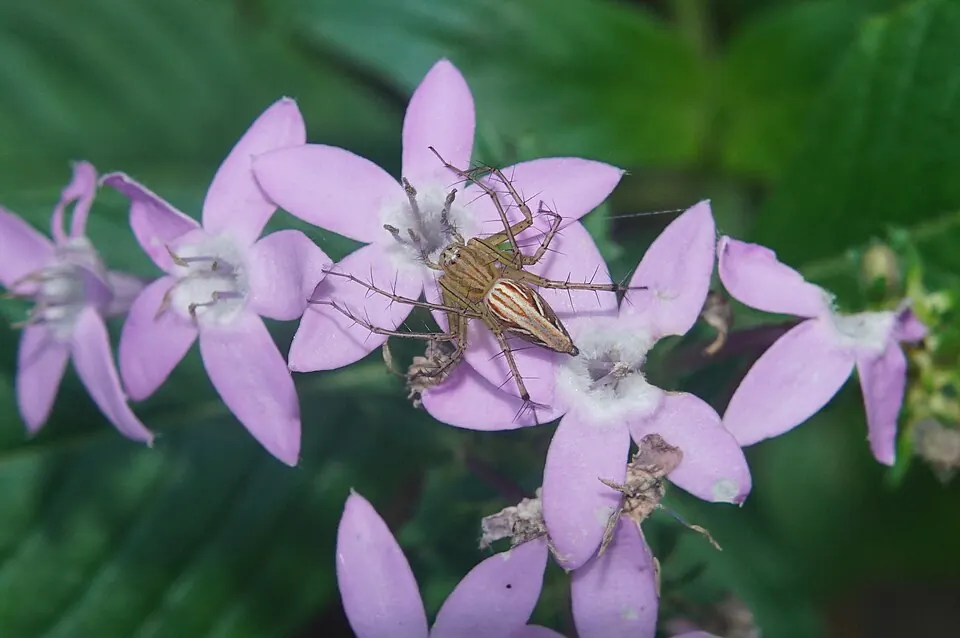
Oxyopidae
Lynx Spider Identification Australia: Spiny-Legged Oxyopidae
Long-spined, sharp-eyed foliage hunter that stalks insects on grasses, shrubs and garden plants instead of building a prey-catching web.
Usually low riskLynx spiders are active hunters in the family Oxyopidae. In Australia, the name covers a group rather than one species, so the most defensible identification is often “lynx spider” or “Oxyopidae” unless a close view and locality support something narrower. Look for conspicuous stiff spines projecting from the long legs, a relatively slim body, an alert stance and a spider hunting openly on grass, leaves, flowers or shrubs without a capture web. Colour can help describe an individual but is not reliable by itself: Australian lynx spiders can be green, yellowish, tan, brown or strongly striped. A sharp photograph showing the eyes, leg spines, body from above and the plant it occupied is much more useful than a distant garden image.
Quick identification
- Long legs armed with rows of obvious stiff spines
- Slim body, often with lengthwise stripes or contrasting markings
- Alert, elevated stance on grass, foliage, flowers or shrubs
- Runs, stalks or leaps after prey rather than waiting in a capture web
- Eye region and leg spines visible in a close, well-lit photograph
What to check next
Confirm three independent clues together: prominent leg spines, open hunting on vegetation and no prey-catching web. Then use a close dorsal and eye-region photograph plus the Australian location before attempting a genus or species identification.
When to seek medical help
Lynx spiders are not among the Australian spiders highlighted by healthdirect as medically dangerous. If a suspected bite occurs, wash the area and use a wrapped cold pack for local discomfort. Seek medical advice for severe pain, worsening swelling or itching, symptoms that do not settle, or any concern. Call 000 for breathing difficulty, collapse or other signs of anaphylaxis.
Where it is usually seen
Open foliage in forests, woodlands, heath, grass and suburban gardens. They commonly wait or prowl on leaves, flower heads, grass stems and shrubs where flying or plant-feeding insects are likely to pass.