Scytodes species
Spitting Spider Identification Australia: Scytodes Guide
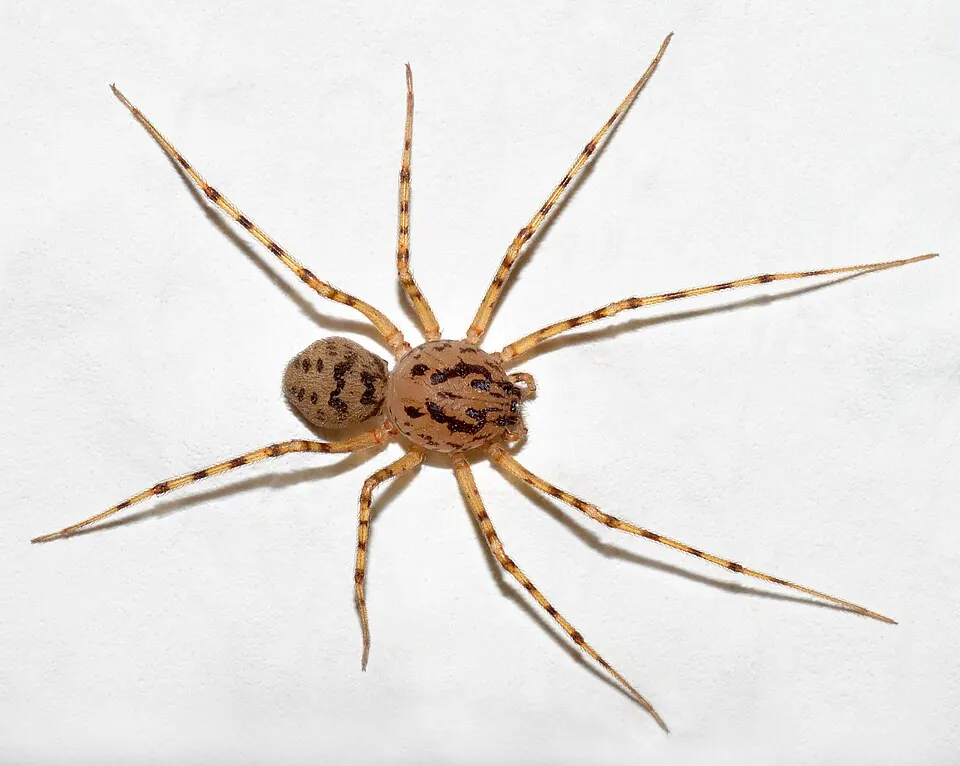
Small six-eyed Scytodes hunter with a high domed carapace, slender legs and a short-range sticky-silk attack instead of a capture web.
Usually low riskSpitting spider is the common name for Scytodes species, a distinctive group of small hunters that pin tiny prey with an adhesive zigzag before approaching to bite and wrap it. For identification, the useful combination is a high rounded front body, only six eyes arranged as three pairs, fine legs and no prey-catching web. Yellow-brown mottling and an indoor encounter can support that match, but neither proves it. This is a genus-level guide: Australian species vary, and a normal phone photograph often cannot show the eye arrangement or characters required for a species name.
Quick identification
- High, rounded carapace: the front body looks unusually domed and may be as bulky as the abdomen
- Six eyes in three separated pairs, best confirmed with a sharp front or oblique macro photograph
- Small body with long, fine legs and usually deliberate rather than rapid movement
- Cream, yellow-brown or brown mottling may cover the body and legs, but pattern varies
- No orb, sheet or tangled prey-catching web; prey is subdued at short range with adhesive silk
What to check next
Photograph the whole spider from above, then obtain a sharp front-oblique view that shows the eye pairs and the high side profile of the carapace. Record body length without the legs, exact locality and whether it was roaming or attached to a web. Do not provoke it to spit: that feeding behaviour is unnecessary for a safe identification.
When to seek medical help
Spitting spiders are not among the Australian spiders highlighted by healthdirect as medically dangerous. Avoid handling. For a suspected bite, wash the area and use a wrapped cold pack for local discomfort. Seek medical advice if pain is severe, symptoms persist or worsen, swelling or itching increases, or you are concerned. Call Triple Zero (000) for breathing difficulty, collapse or other signs of anaphylaxis.
Where it is usually seen
Sheltered surfaces and crevices where small arthropod prey occurs, including walls, buildings, sheds, under loose material and in protected outdoor habitat. Indoor association is species- and locality-dependent and should be treated as context, not as a defining character.