
Identify spiders in Tasmania
Tasmania spider identification guide
Identify spiders in Tasmania by comparing likely local spiders, including dangerous possibilities, common house spiders, garden spiders, web builders and ground hunters.
Common questions
Helpful spider ID guides
TAS spider guide
Dangerous or medically significant spiders to check first
These Tasmania spider possibilities deserve extra caution, especially if a bite has occurred or symptoms are developing.
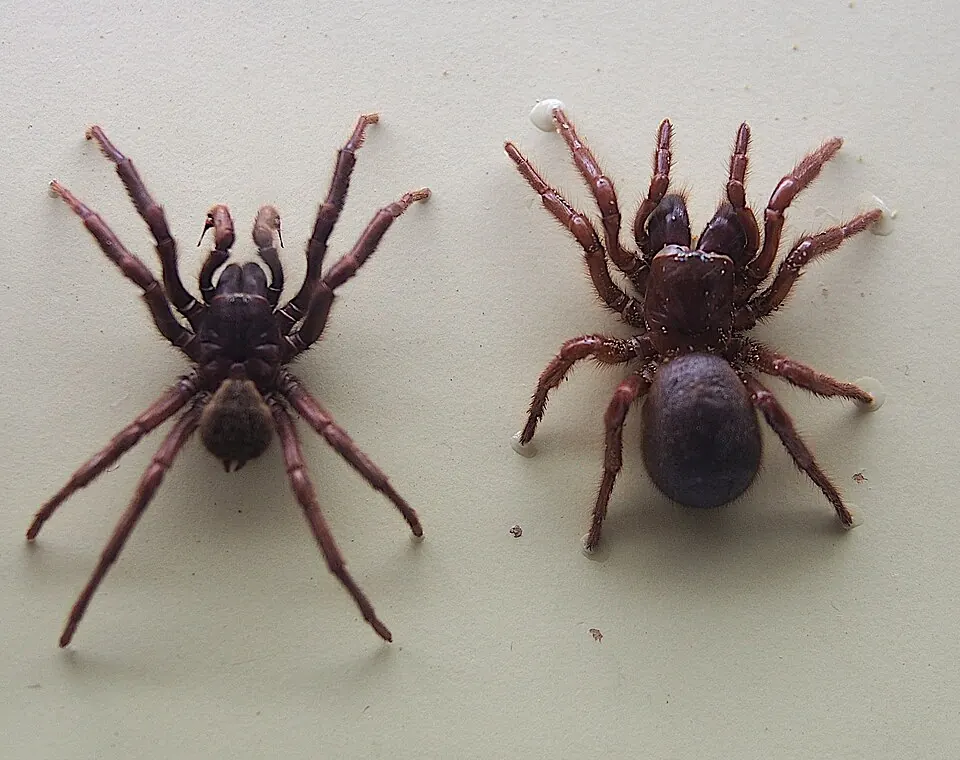 Medical emergency potentialAustralian funnel-web spidersA group of dark, mygalomorph spiders from eastern Australia, often linked with silk-lined retreats and burrows.
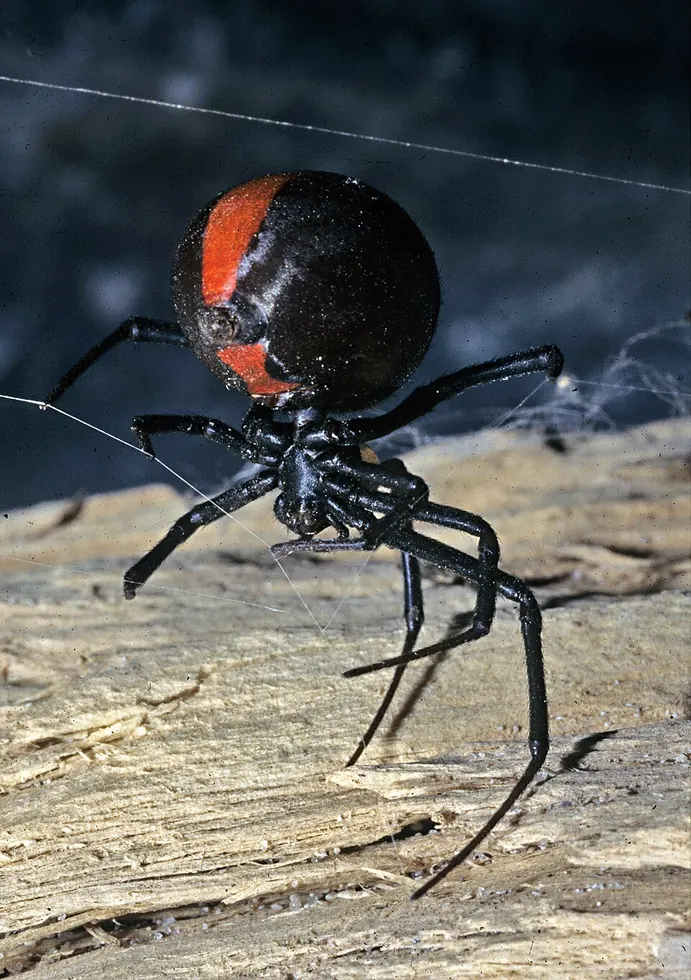 Medically significantRedback spiderSmall black spider, usually female, with a red stripe or hourglass marking and a messy web in dry sheltered places.
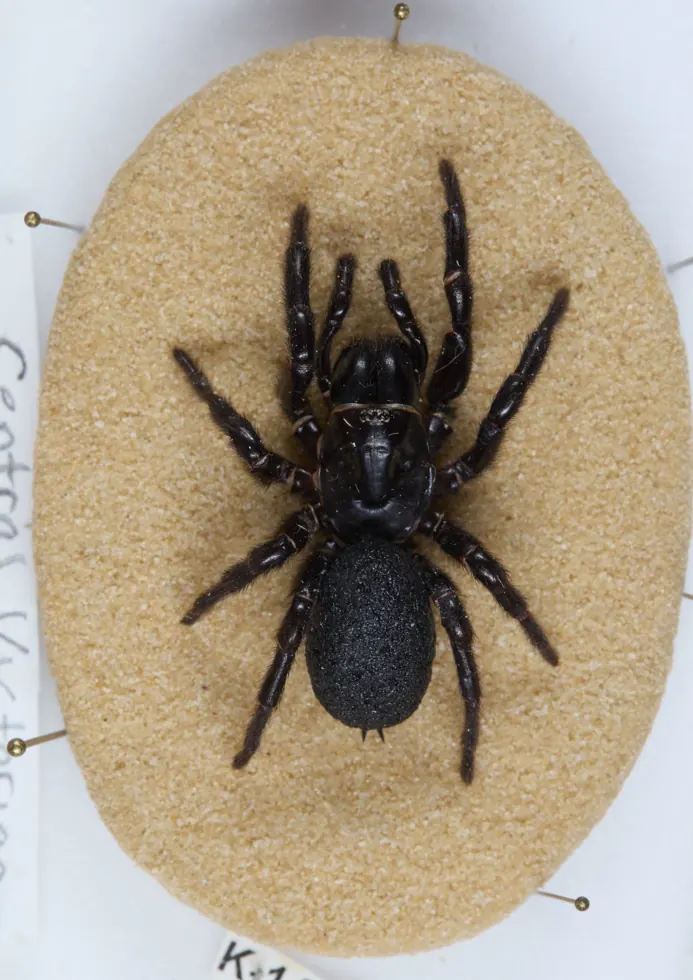 Medical emergency potentialVictorian funnel-web spiderDark Victorian funnel-web spider from silk-lined burrows, with trip-line silk and a defensive rearing posture when threatened.Medical emergency potentialTasmanian funnel-web spiderDark robust Tasmanian funnel-web associated with moist sheltered ground and burrows, requiring emergency treatment after any suspected bite.
TAS spider guide
Common spiders found in Tasmania
Compare common Tasmania spiders by appearance, web type, size and where they are usually found.
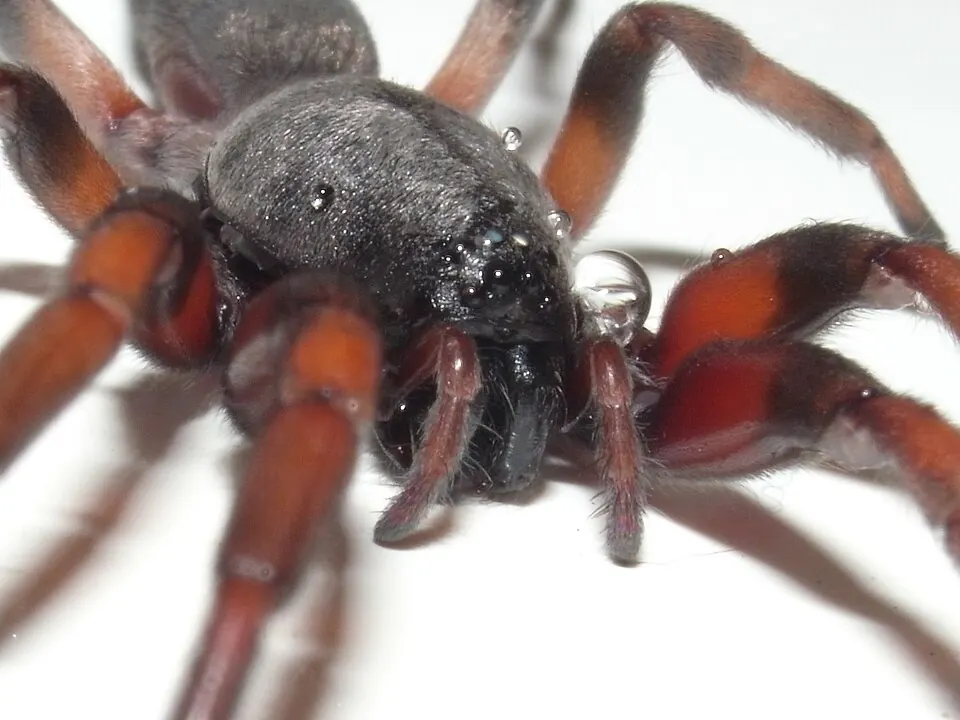 Painful but usually not life-threateningWhite-tailed spiderDark, cigar-shaped wandering spider with a pale spot at the tip of the abdomen, often seen indoors at night.
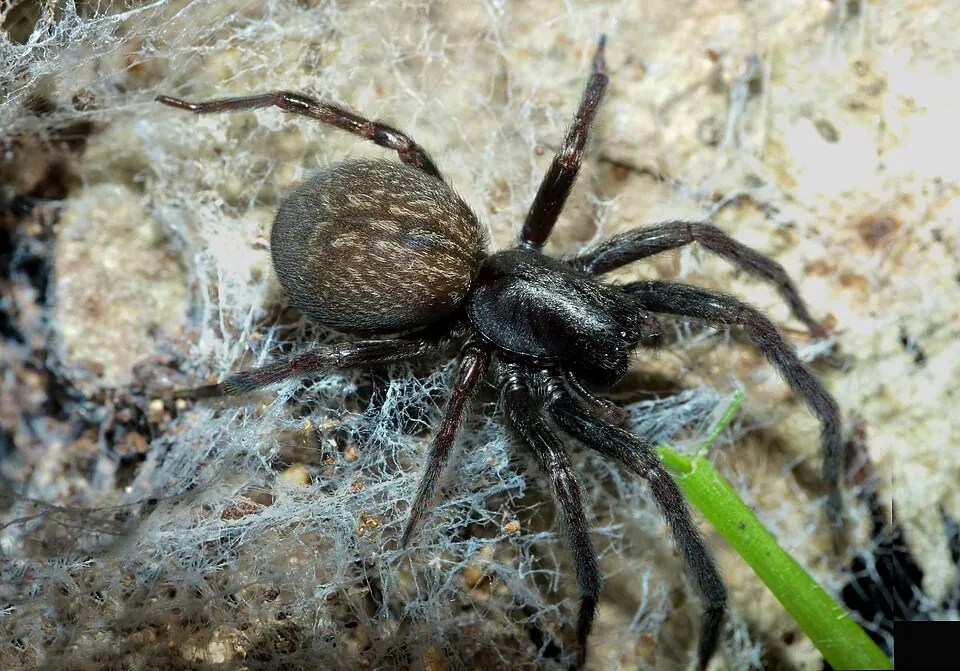 Usually low riskBlack house spiderDark, sturdy house spider that builds messy lace-like webs around windows, walls, fences and crevices.
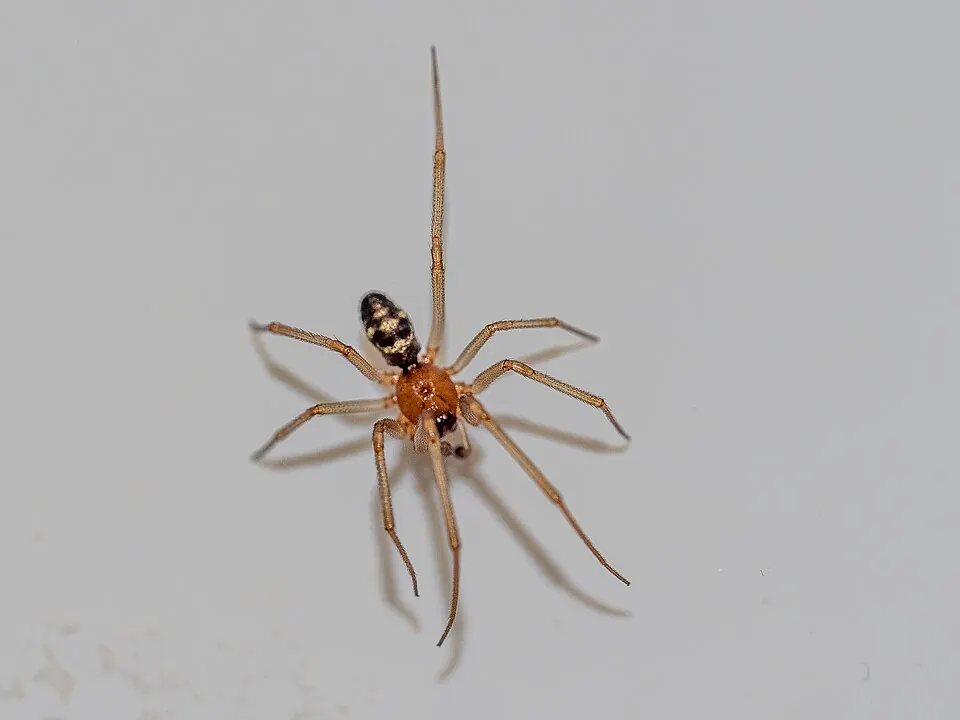 Usually low riskBrown house spider / cupboard spiderSmall brown comb-footed spider in messy indoor webs, sometimes confused with redbacks or false widows.
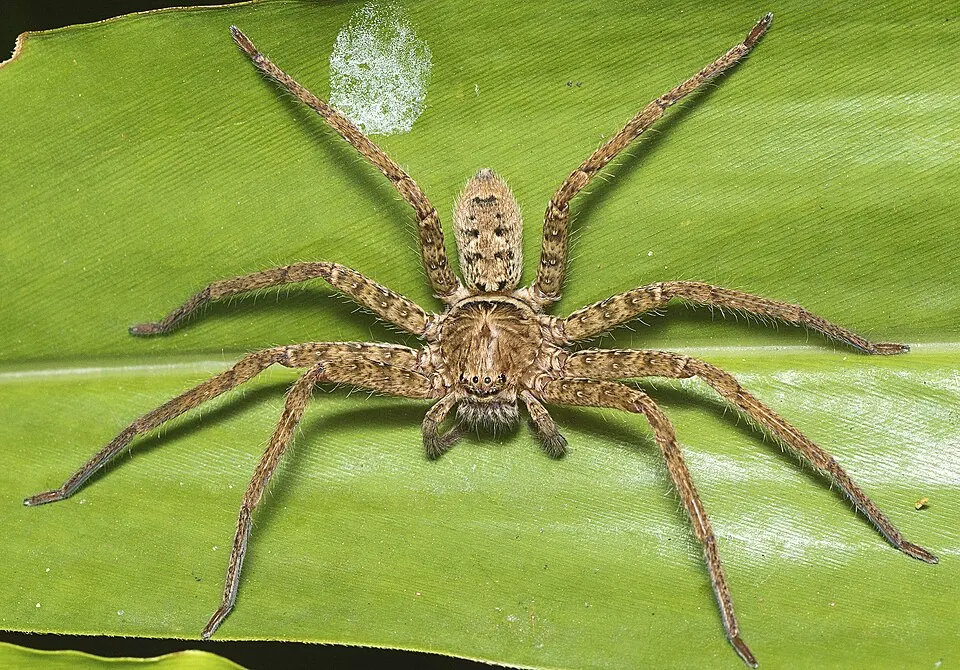 Usually low riskHuntsman spiderLarge, flat, long-legged spider often seen on walls, ceilings, tree bark and inside cars.
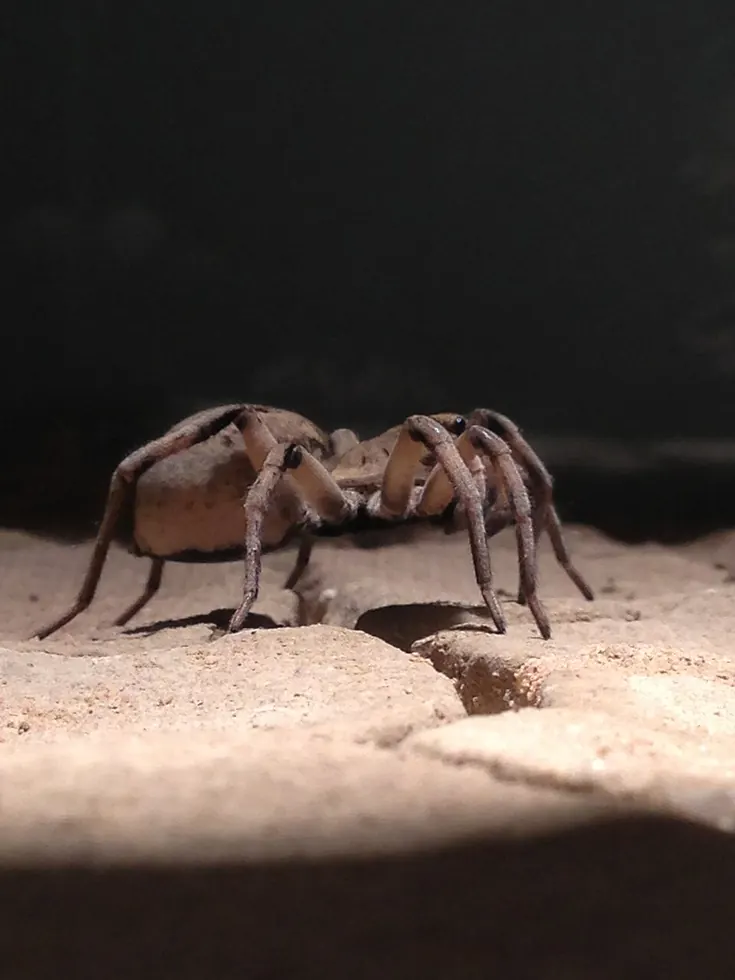 Painful but usually not life-threateningWolf spiderFast ground-running hunter, often mottled brown or grey, sometimes carrying an egg sac or spiderlings.
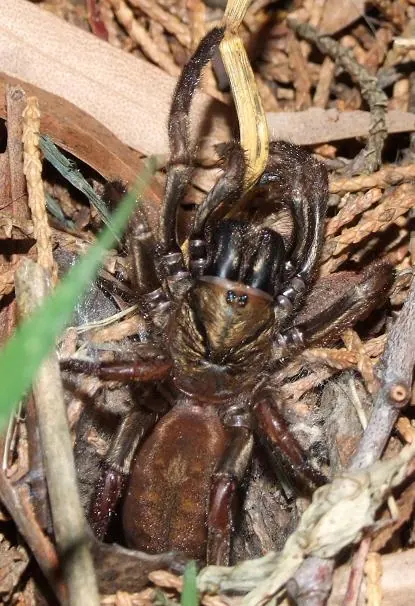 Painful but usually not life-threateningTrapdoor spiderStocky ground spider associated with burrows, often mistaken for funnel-webs when wandering.
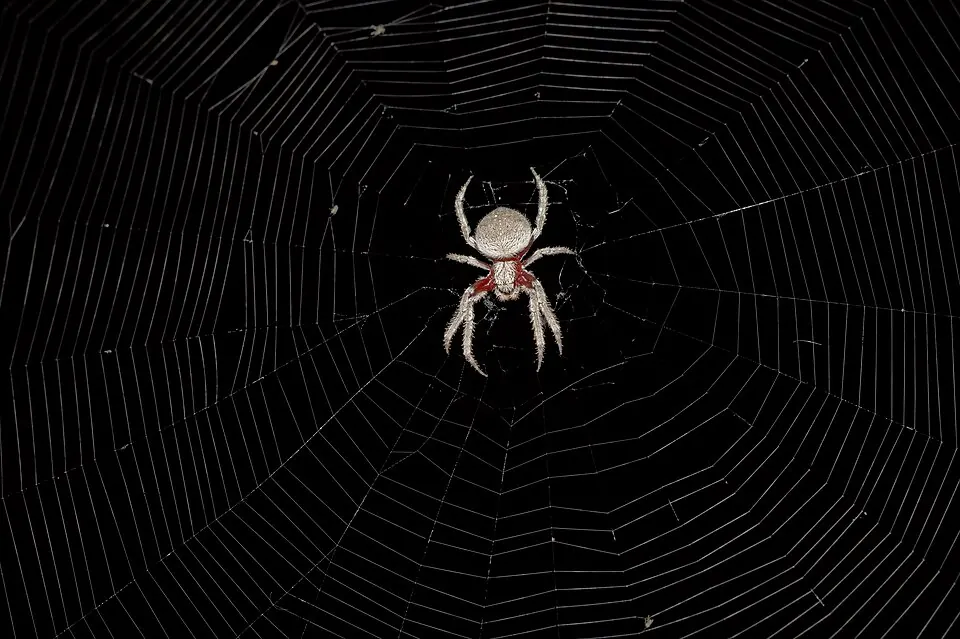 Usually low riskGarden orb-weaverRound-bodied spider that builds classic circular orb webs in gardens, especially at night.
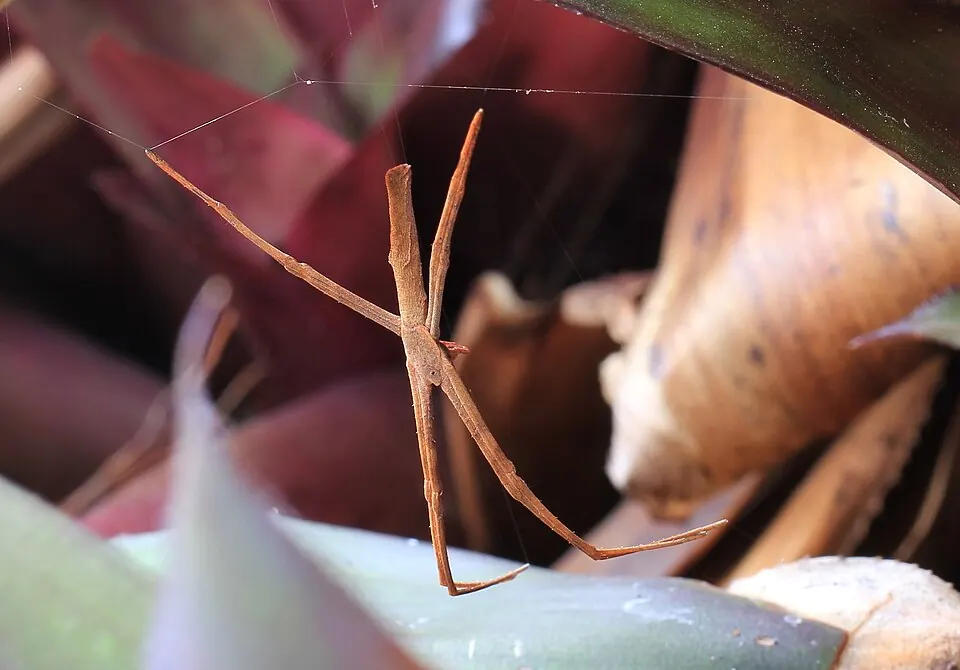 Usually low riskRufous net-casting spiderSlender, long-legged eastern Australian net-casting spider with huge forward-facing eyes and a small handheld silk net used at night.
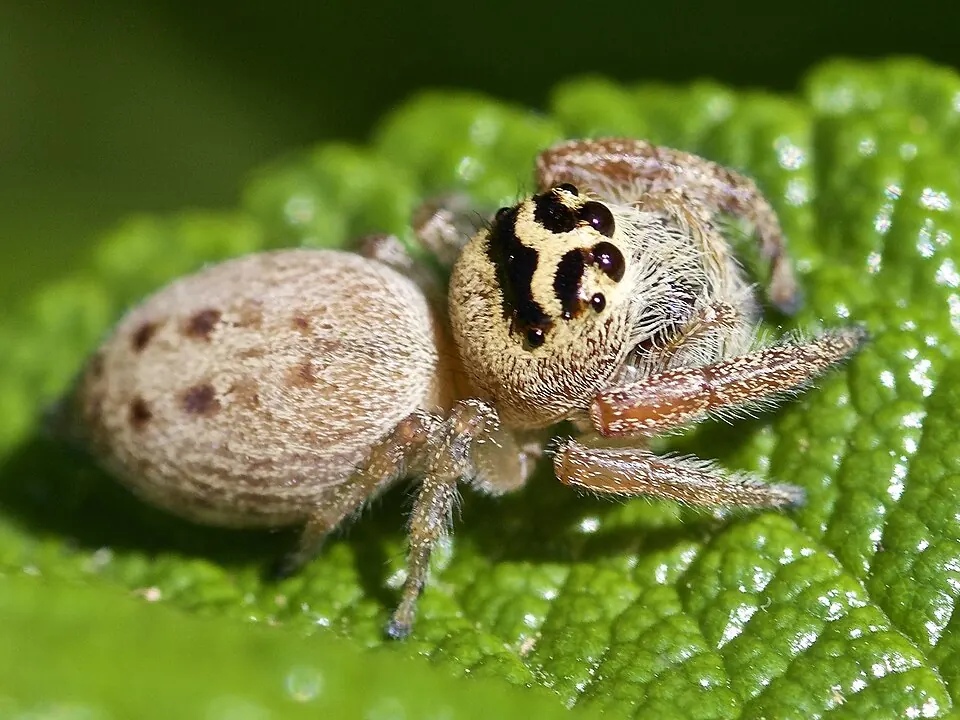 Usually low riskJumping spiderTiny to small active hunter with large front eyes and jerky jumping movement.
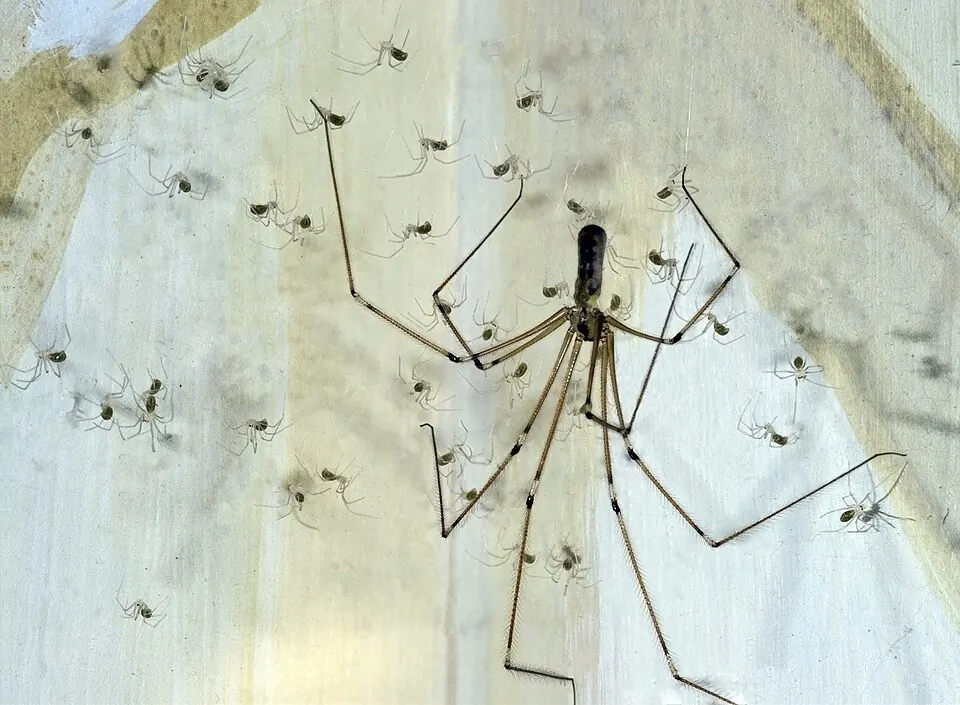 Usually low riskDaddy-long-legs spiderVery thin-legged indoor spider in loose corner webs, common in houses and garages.
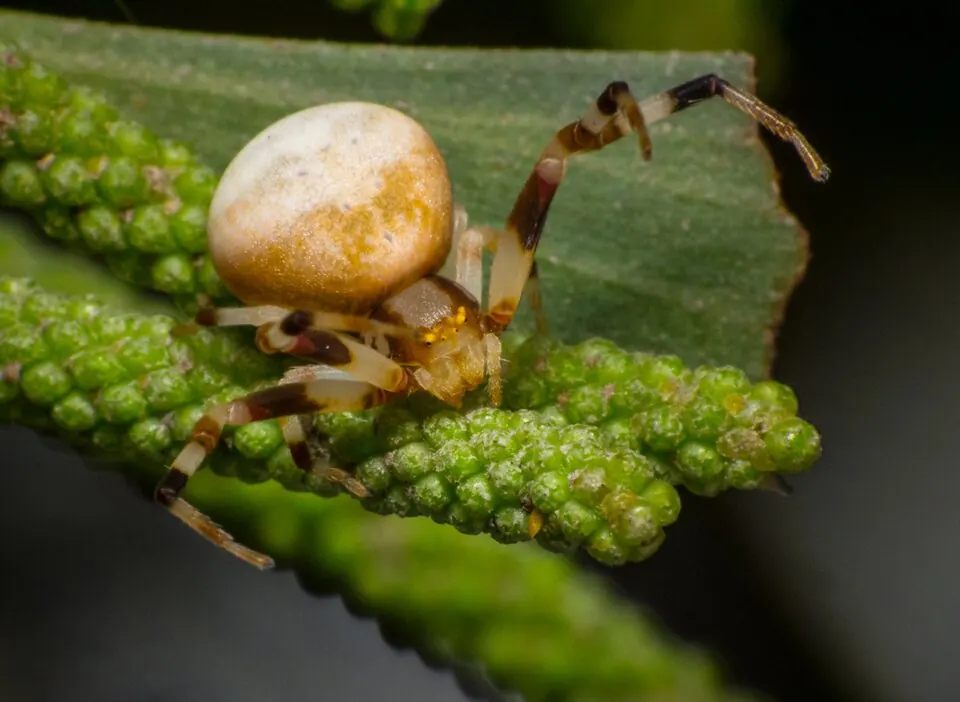 Usually low riskFlower spider / crab spiderSmall spider with crab-like sideways legs, often waiting on flowers or foliage.
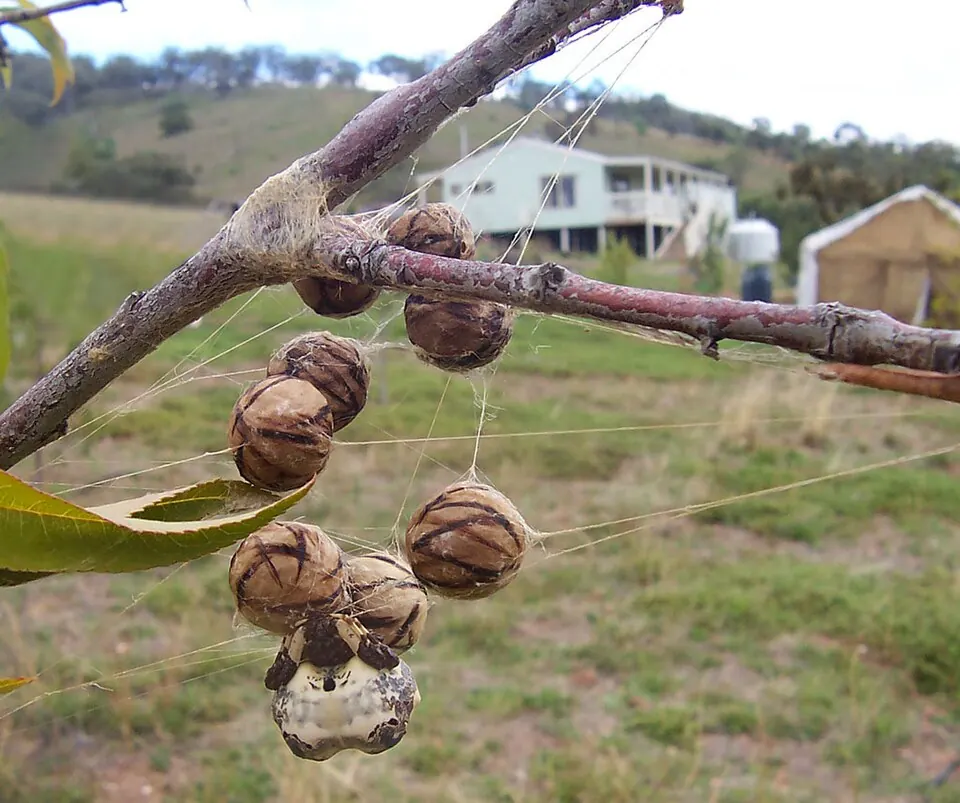 Usually low riskBird-dropping spiderCamouflaged orb-weaver relative that resembles a bird dropping when curled up.
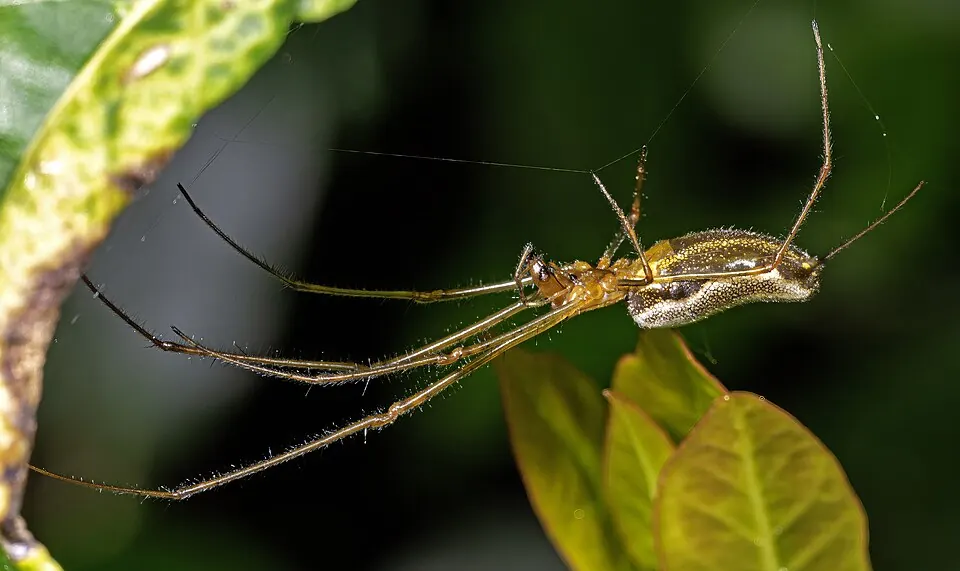 Usually low riskLong-jawed orb-weaverSlender long-legged orb-weaver often near water or vegetation, with an elongated body.
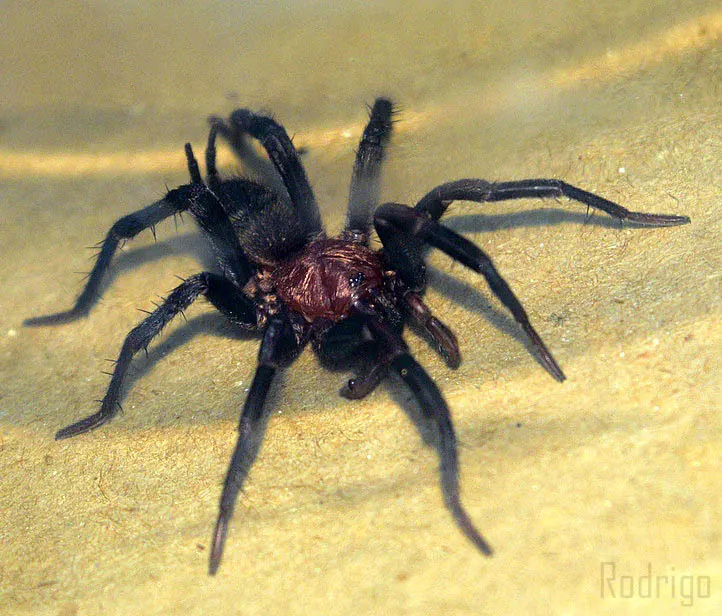 Painful but usually not life-threateningCurtain-web spiderDark mygalomorph spider associated with sheet-like or curtain-like silk retreats in sheltered places.
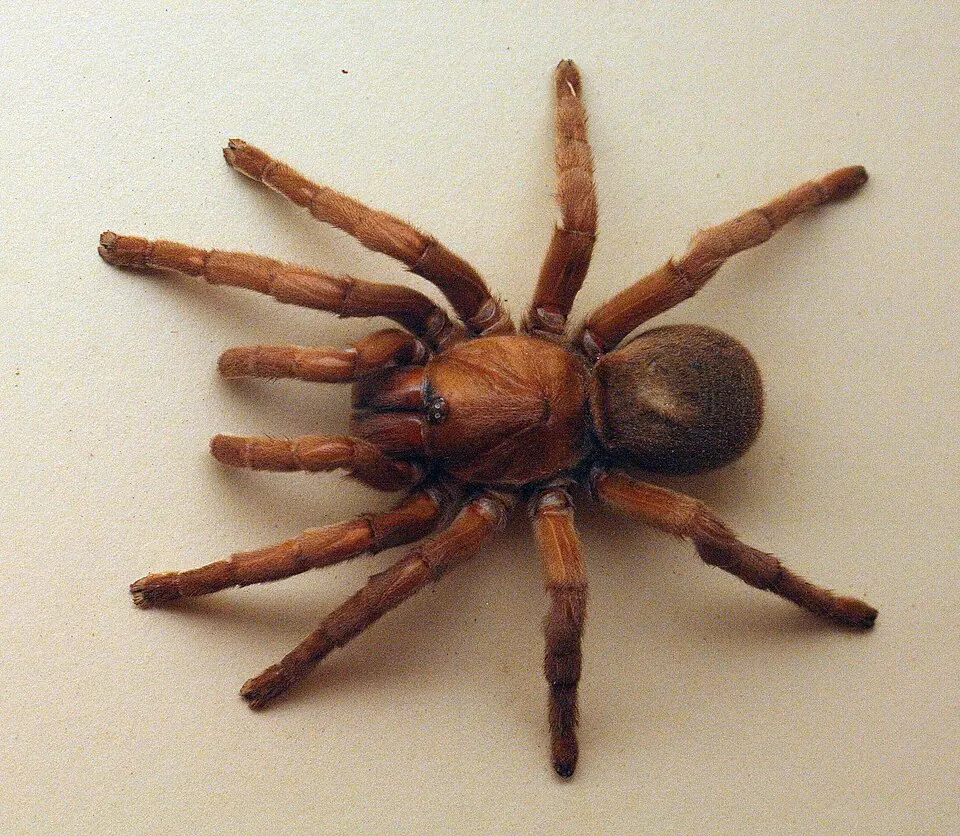 Painful but usually not life-threateningBrush-footed trapdoor spiderSturdy trapdoor-type spider linked with silk-lined burrows and often confused with other dark ground spiders.
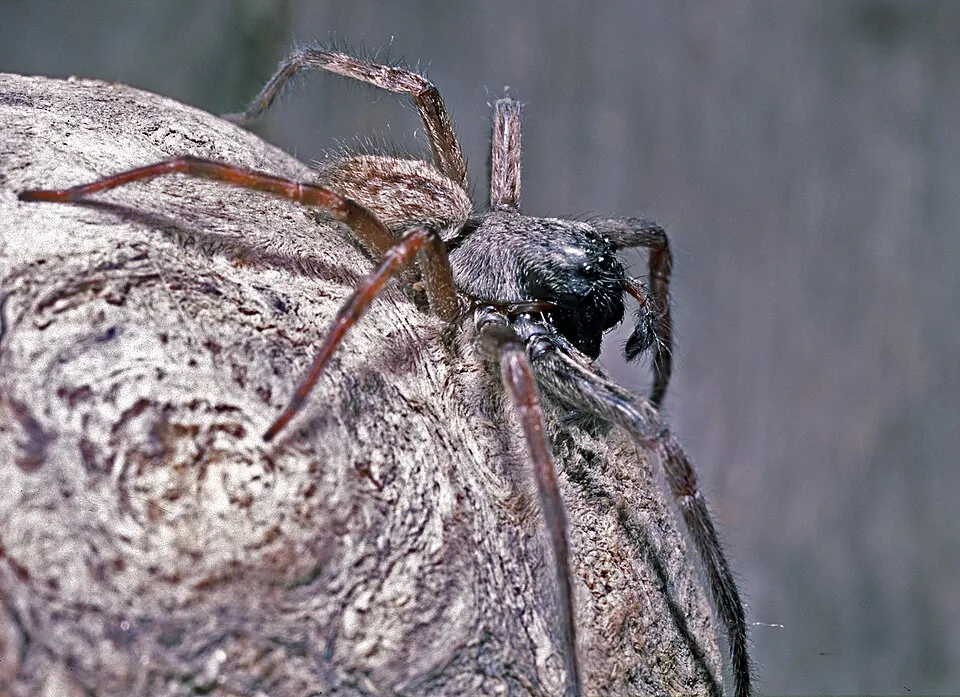 Usually low riskGrey house spiderGrey to brown house spider in messy retreat webs around windows, fences, walls and bark.
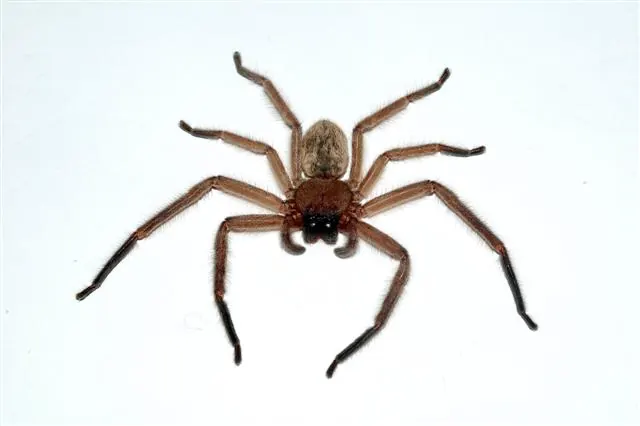 Usually low riskSocial huntsman spiderFlattened huntsman spider often found beneath bark or timber, sometimes in groups.
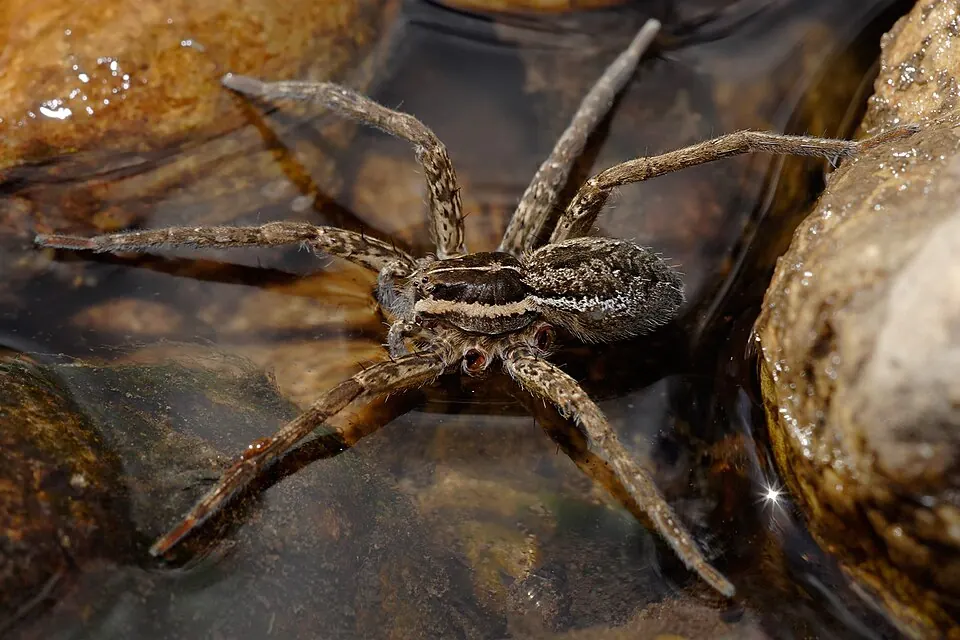 Usually low riskNursery web spiderLong-legged hunting spider where females may guard a silk nursery for spiderlings.
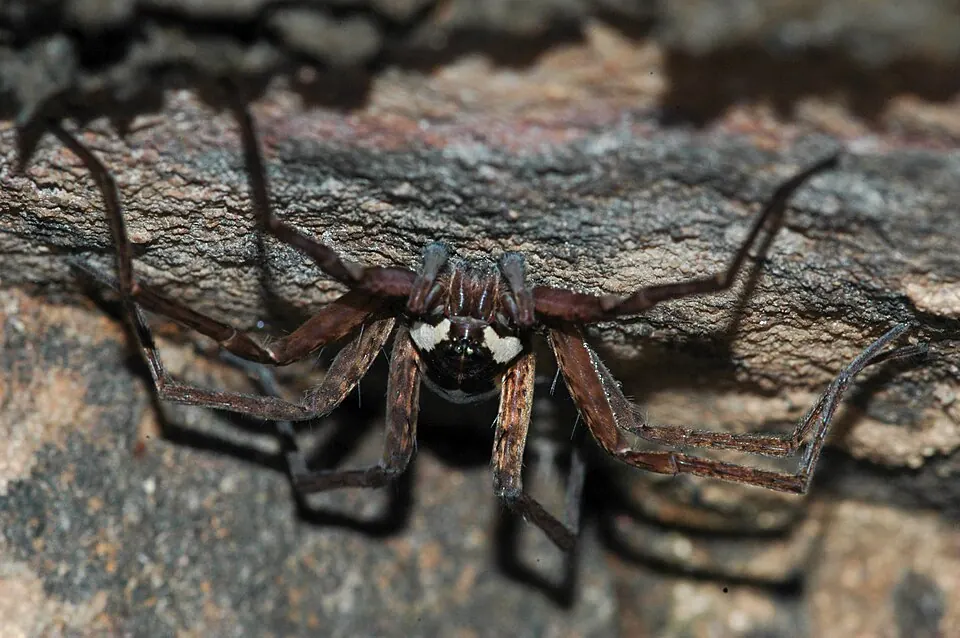 Usually low riskFishing spiderLarge long-legged spider often found near water, capable of moving across the water surface.
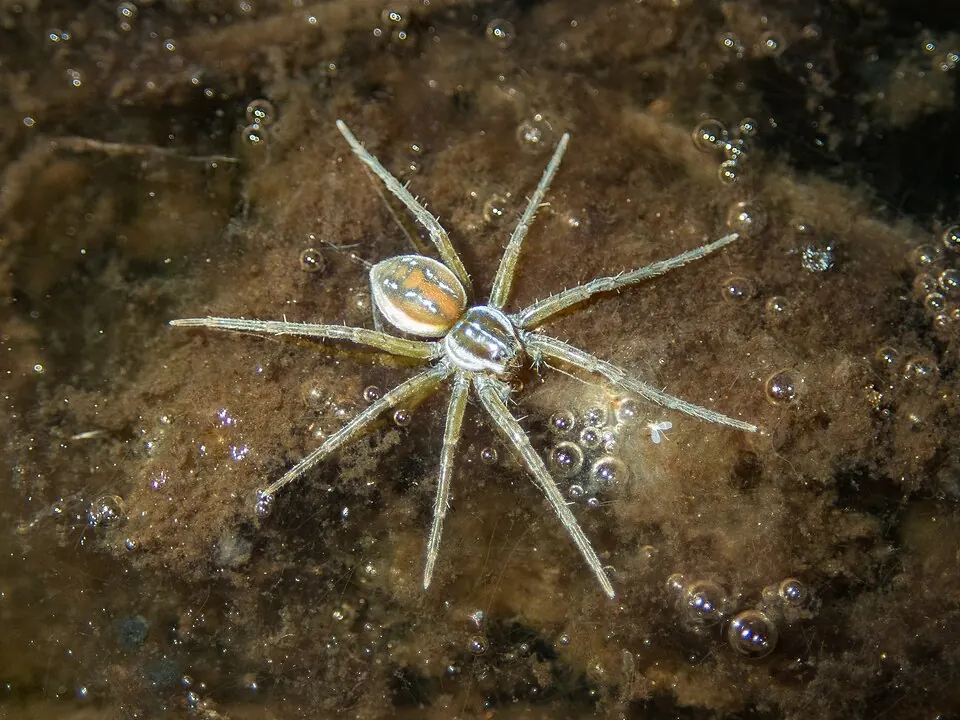 Usually low riskClever fishing spiderMedium to large Australian fishing spider found around creeks, streams, freshwater lakes and waterside vegetation.
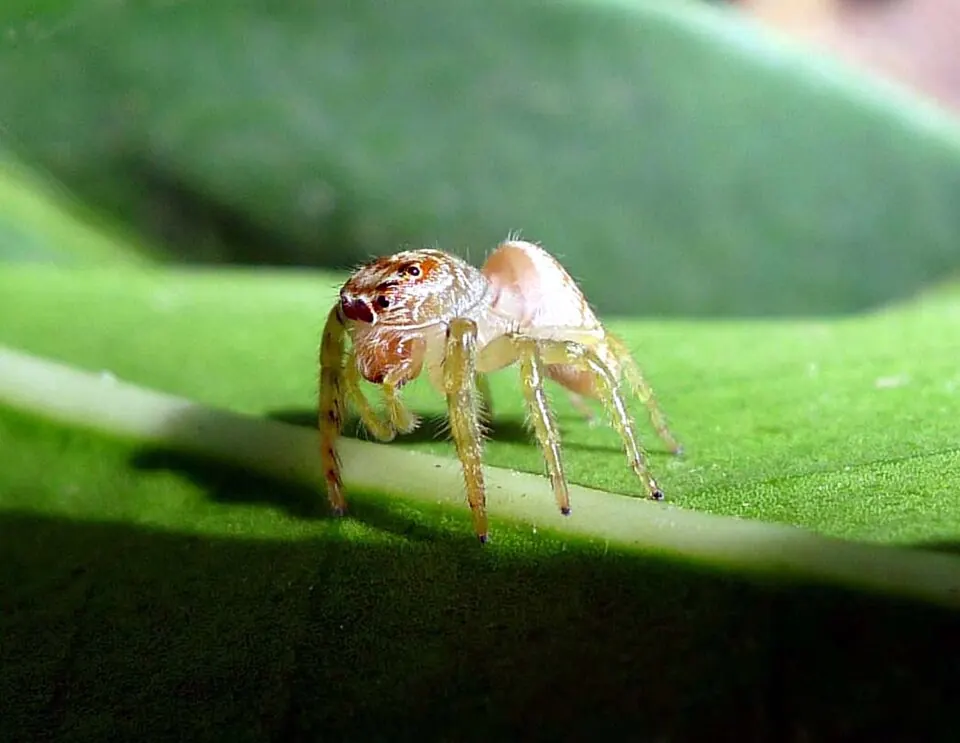 Usually low riskGarden jumping spiderSmall active jumping spider, usually brown, cream or patterned, often seen on garden plants, walls, fences and windows.
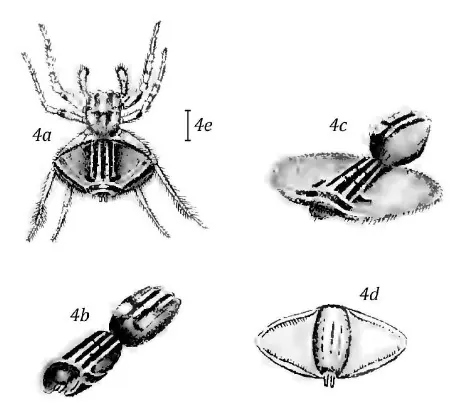 Usually low riskPeacock spiderTiny colourful jumping spider, with males known for bright display patterns and courtship dances.
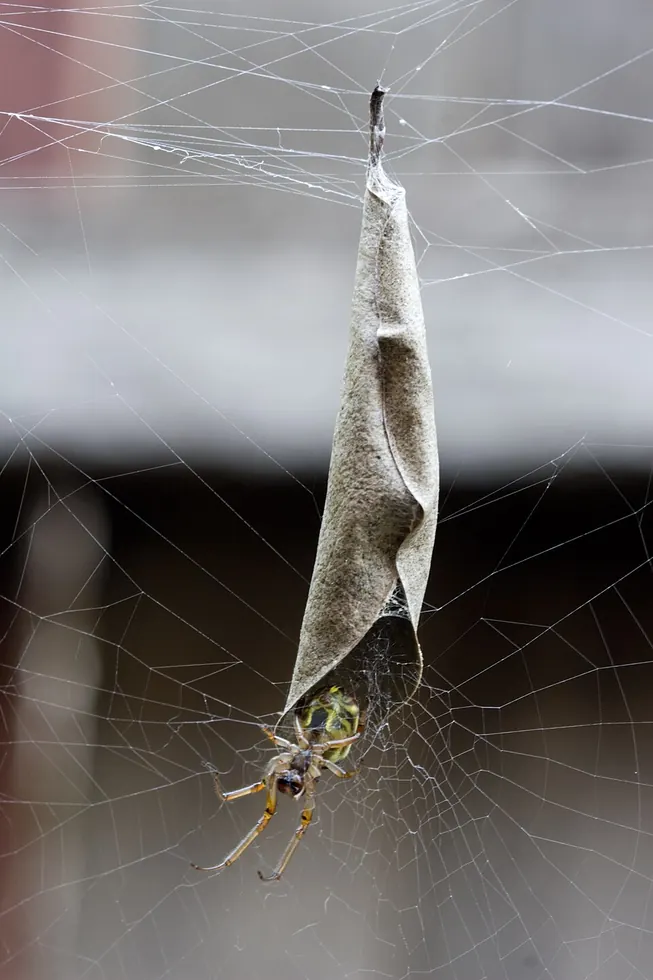 Usually low riskLeaf-curling spiderOrb-weaver that hides in a curled leaf suspended in its web.
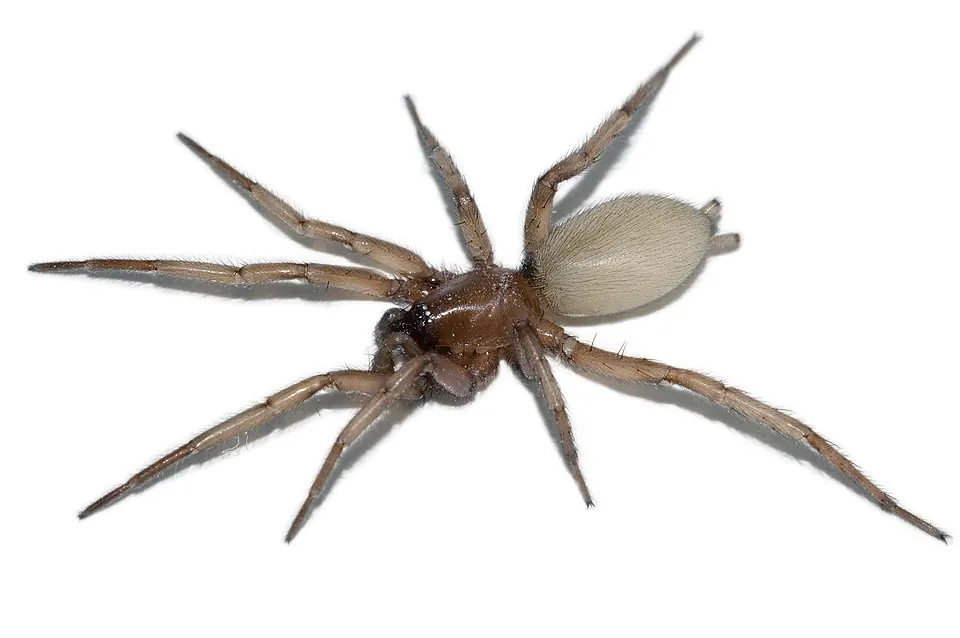 Usually low riskSwift ground spiderFast-running ground spider, usually dark or brown, often found under objects or crossing floors.
 Usually low riskOrange-legged swift spiderFast black-and-white Australian ground hunter with yellow to orange front legs, often seen sprinting across floors, logs, handrails or leaf litter.
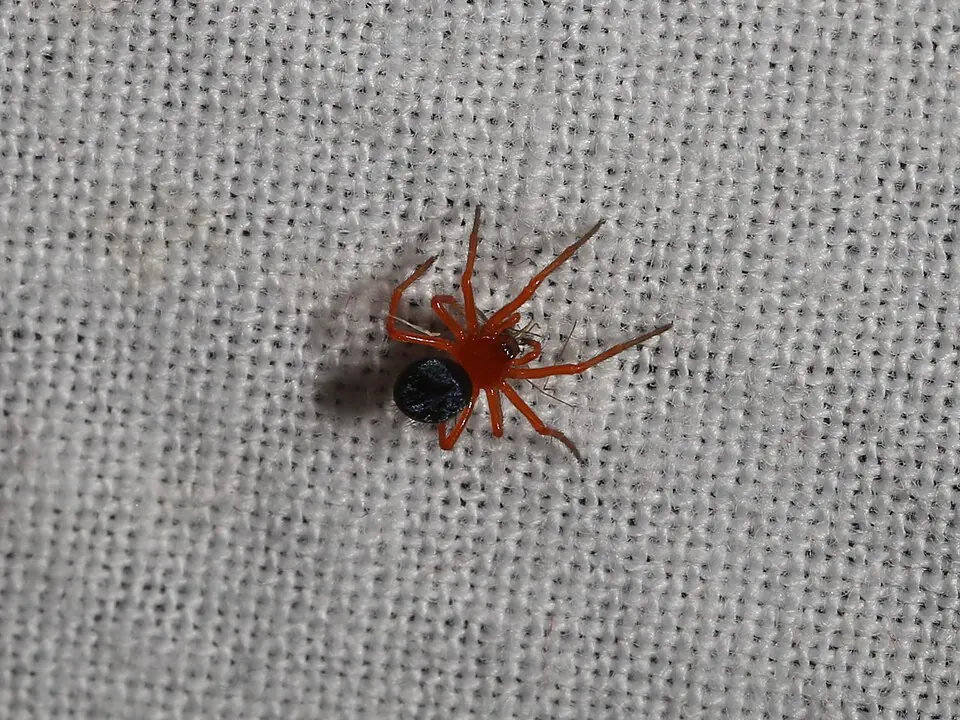 Usually low riskRed and black spiderRed-bodied and black-abdomen spider often found under bark, logs or in leaf litter.
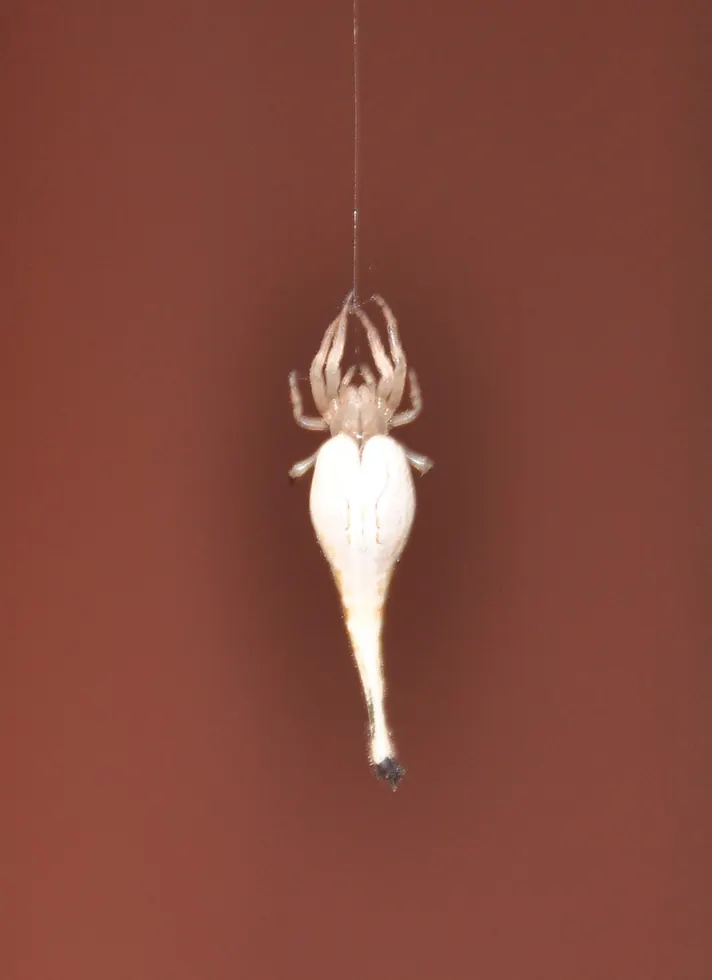 Usually low riskScorpion-tailed spiderOrb-weaving spider with a distinctive tail-like abdomen, usually seen sitting in a web in gardens or shrubs.
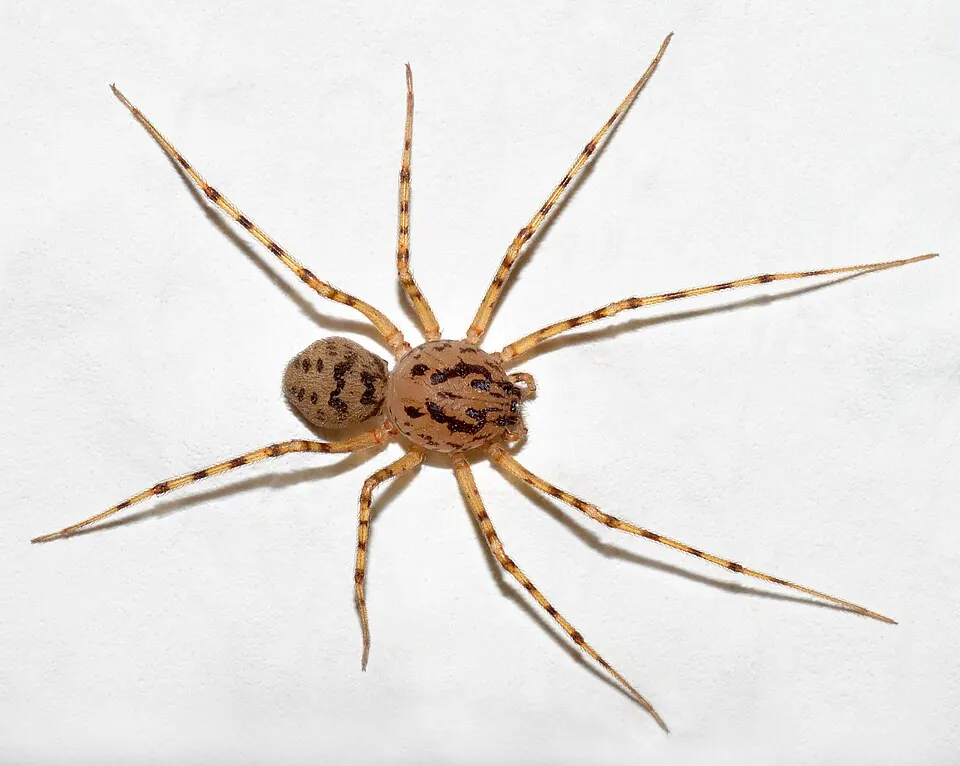 Usually low riskSpitting spiderSmall slow-moving spider with a domed body and long thin legs, sometimes found indoors.
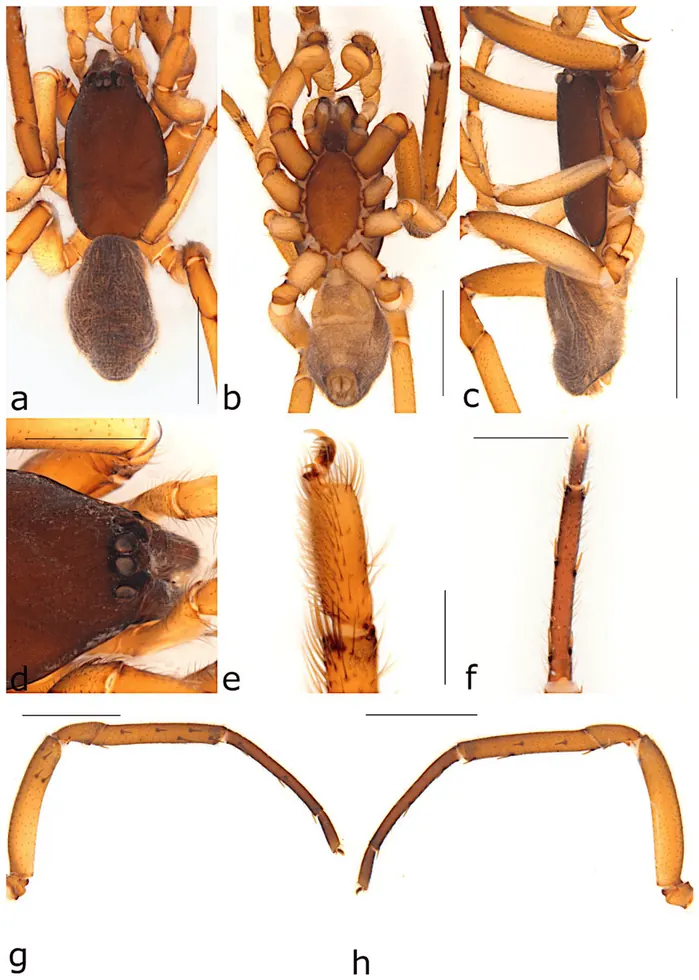 Usually low riskTube-dwelling spiderSlender spider that lives in a silk tube or crevice retreat, with radiating signal threads around the entrance.
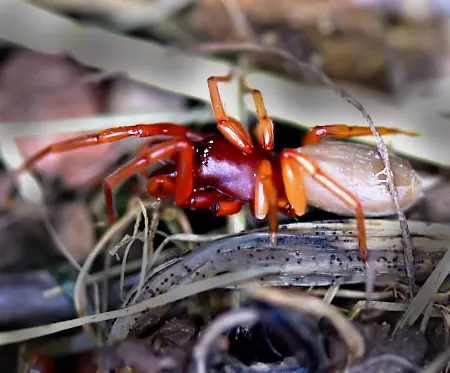 Usually low riskSlater-eating spider / woodlouse hunterReddish spider with long forward-pointing jaws and a pale grey to yellow-brown abdomen, often found in damp sheltered places.
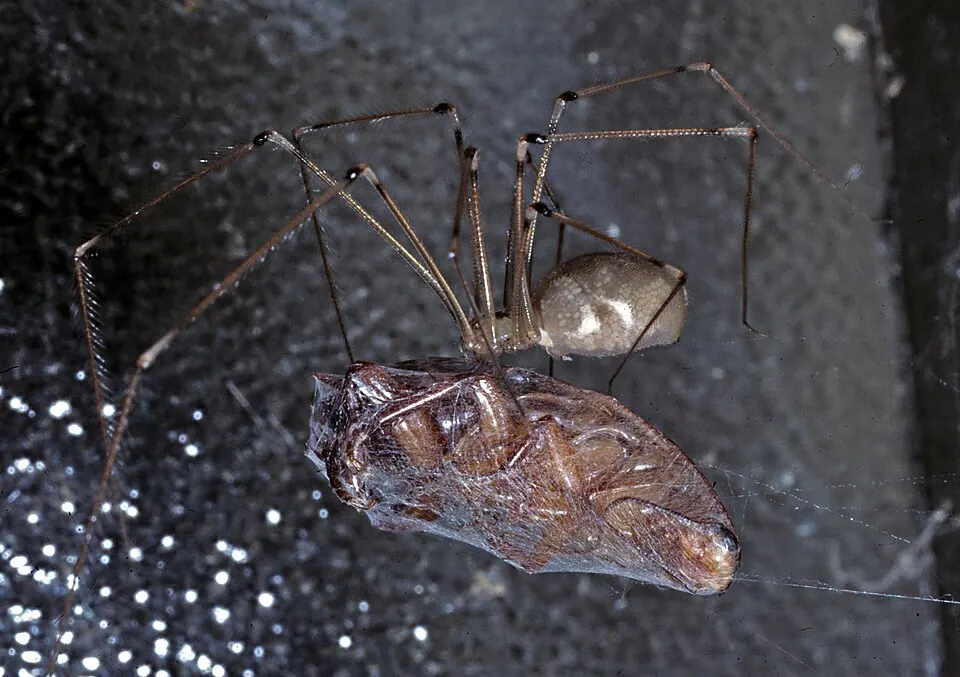 Usually low riskCommon house spiderSmall dull brown comb-footed spider that builds tangled webs in quiet corners, sheds, bathrooms and other sheltered indoor places.
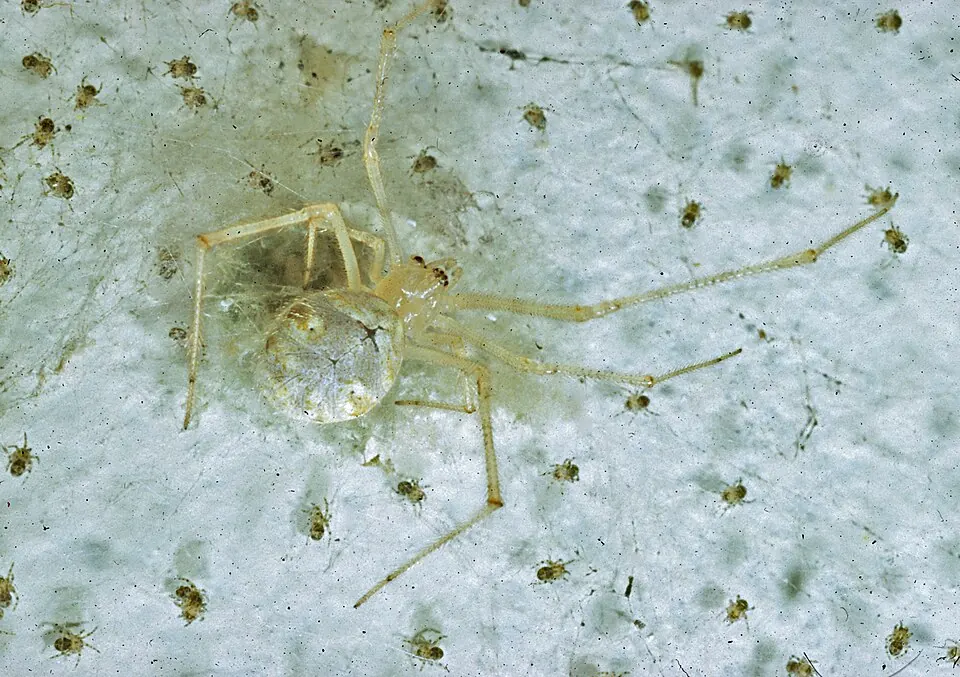 Usually low riskWhite porch spiderPale comb-footed spider with very long front legs, often found in tangled webs under eaves, porches and sheltered house edges.
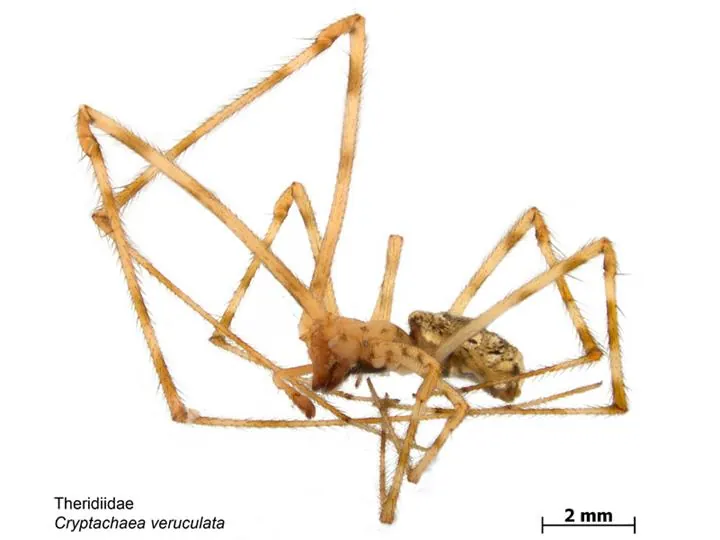 Usually low riskDiamond comb-footed spiderTiny patterned comb-footed spider in small messy webs on plants, garden edges and sheltered built structures.
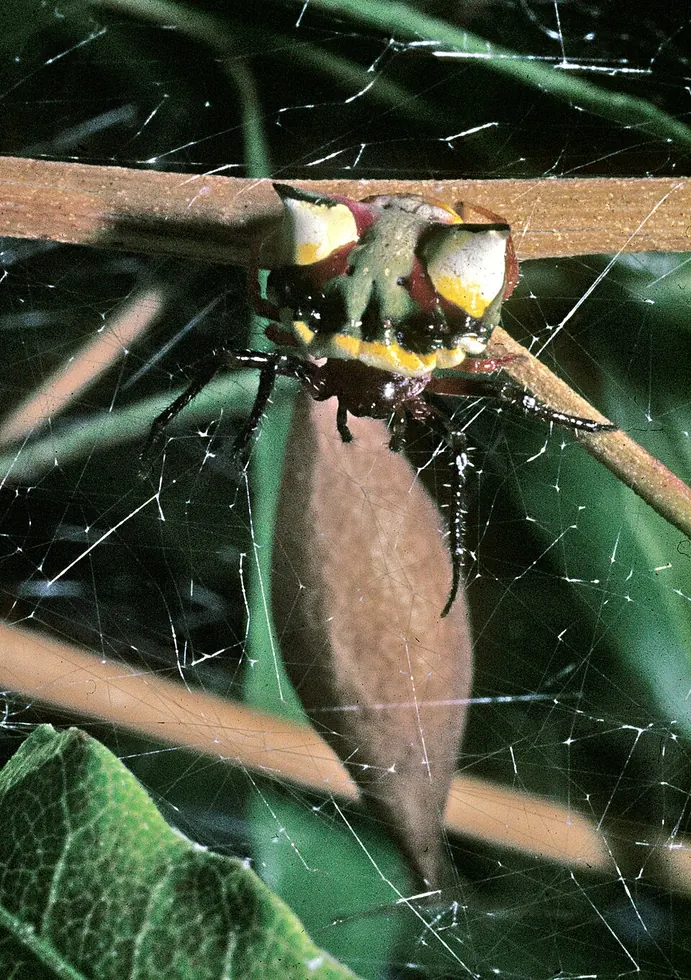 Usually low riskTwo-spined spiderSmall colourful orb-weaver with two pale spines on the adult female abdomen, often hiding under leaves by day and web-building at night.
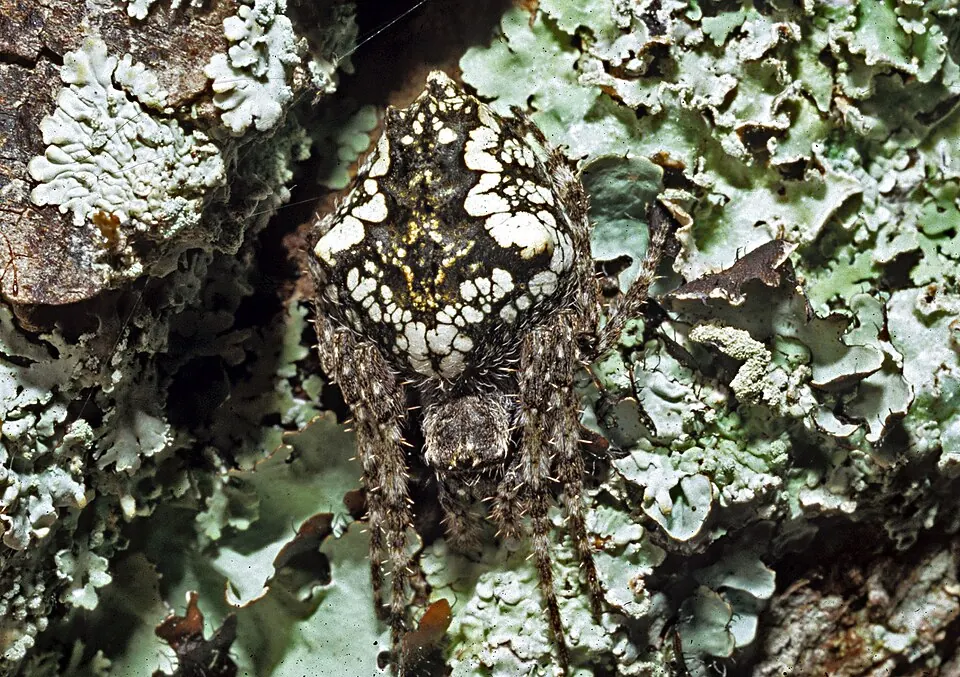 Usually low riskHeroic orb-weaver / lichen spiderChunky patterned orb-weaver with lichen-like camouflage, often found on walls, fences, bark, shrubs or near a night web.
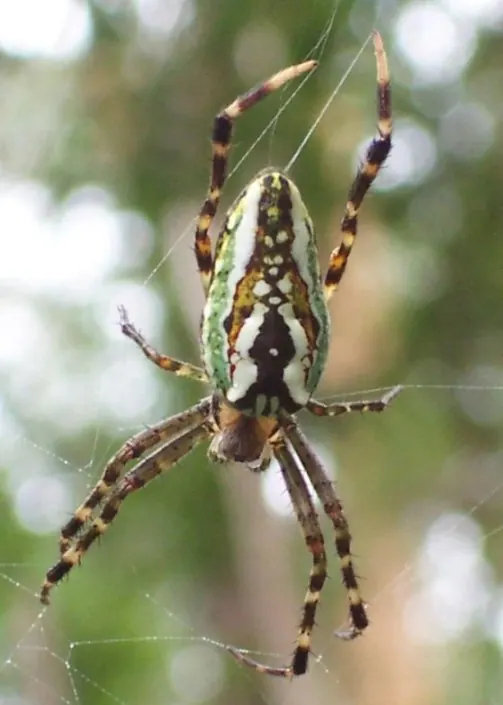 Usually low riskEnamelled spider / Bradley’s grass orb-weaverSmall colourful orb-weaver with glossy enamel-like markings, often found in shrubs, grass, garden foliage and low orb webs.
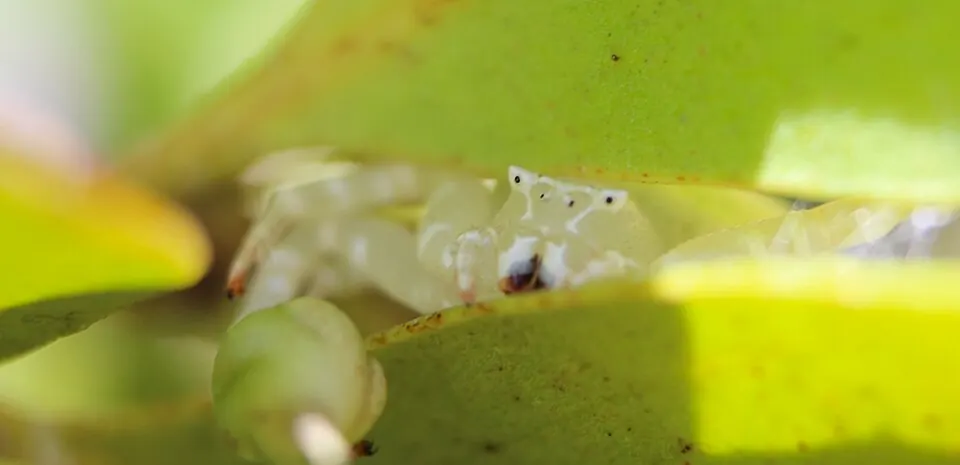 Usually low riskWhite flower spider / spectacular crab spiderSmall white, cream or yellow crab spider that waits on flowers with front legs held out to ambush visiting insects.
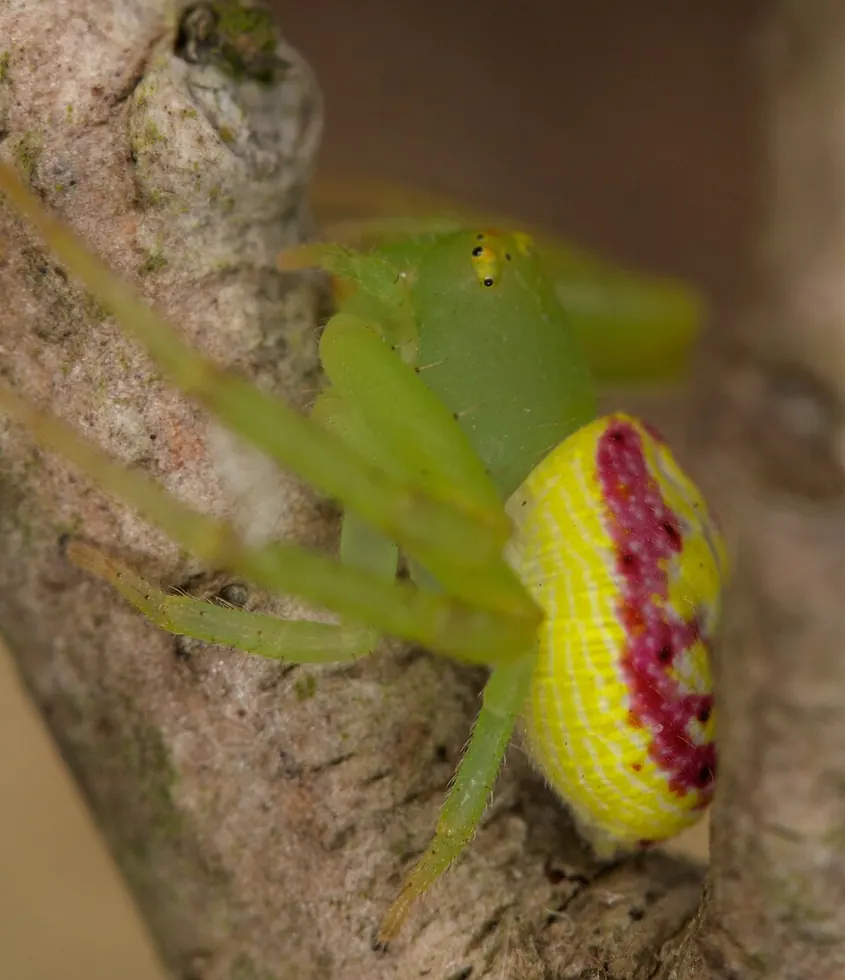 Usually low riskPink flower spider / green crab spiderSmall green, yellow or pinkish crab spider that waits on flowers and foliage with front legs held sideways.
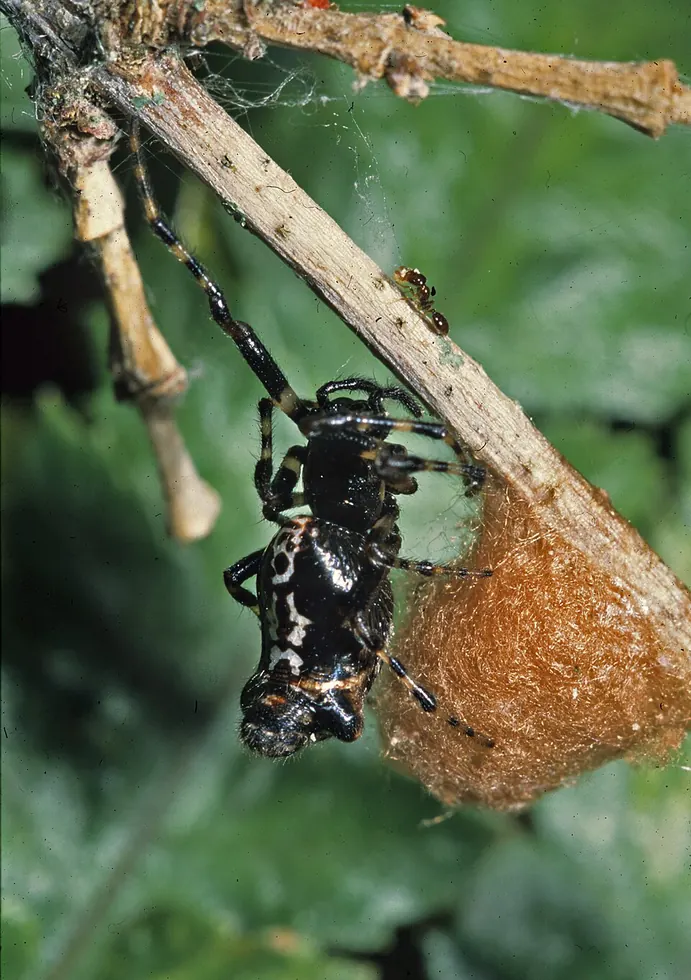 Usually low riskThree-lobed spiderSmall orb-weaver with an unusual lobed abdomen, often sitting in a web with debris or silk decoration.
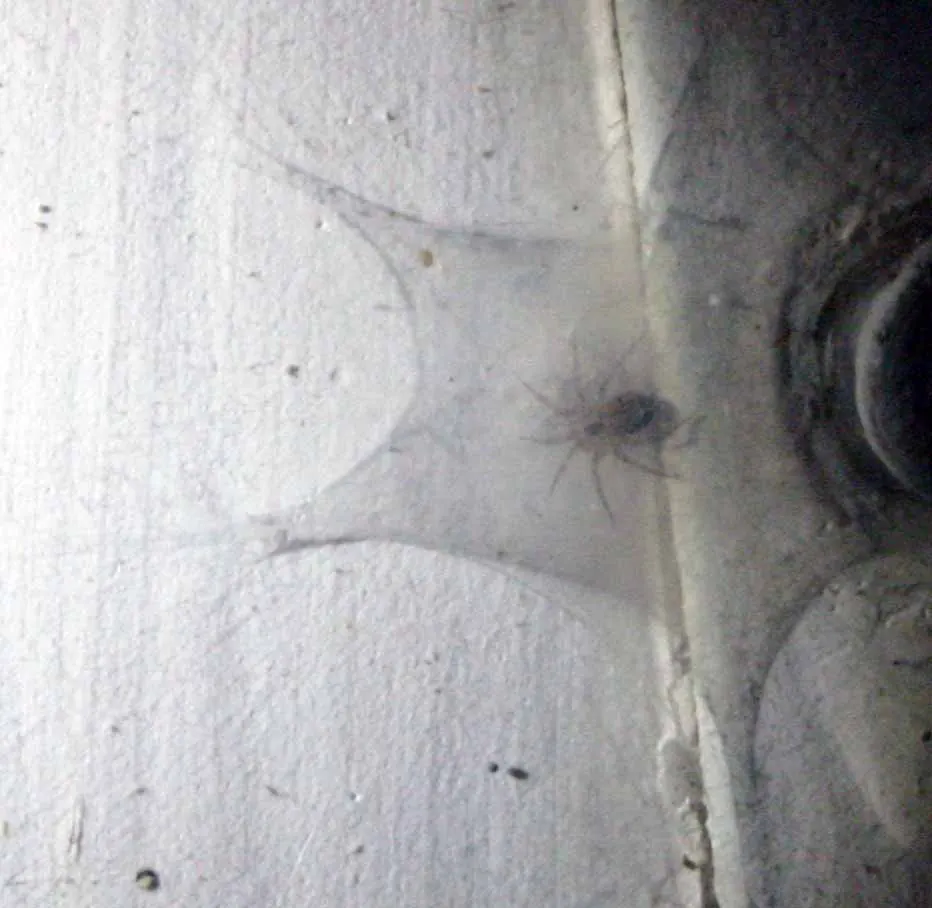 Usually low riskWall spider / baseboard spiderVery tiny pale-grey wall spider that makes a small flat web on walls, ceilings, skirting boards or bathroom corners.
 Usually low riskGiant bark jumping spiderCompact grey-brown jumping spider often seen on bark, walls, fences or garden surfaces, with large forward-facing eyes.
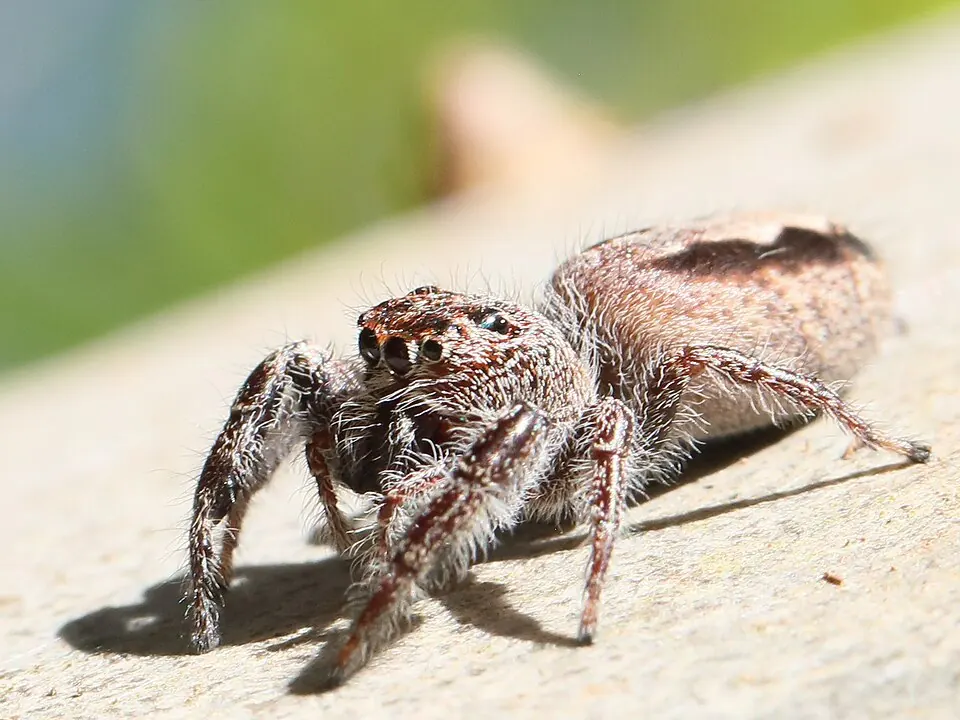 Usually low riskSuperb jumping spiderLarge, sturdy Australian jumping spider with a robust body, strong front legs and bold stop-start hunting movements on bark, walls or foliage.
 Usually low riskTasmanian cave spiderLarge long-legged Tasmanian spider found in caves and other cool, damp dark retreats, often with a broad sheet web.
 Usually low riskBanded garden spiderStriped orb-weaver found in gardens and low vegetation, often sitting head-down in a round web with banded legs.
 Usually low riskSombrero spider / sheetweb spiderBrown, long-legged sheetweb spider from eastern and southern Australia, best recognised by its broad sheet web with a raised funnel-like centre.
 Usually low riskRed-tipped square-ended crab spiderSmall green crab spider found on Australian foliage, especially Dianella, with long front legs and red-tipped abdominal humps.
 Usually low riskTrapezoid crab spider / trapezium crab spiderSmall square-ended crab spider found on foliage, bark and garden plants, with long front legs and a trapezoid body outline.
 Usually low riskCommon peacock spiderTiny southern Australian jumping spider, famous for colourful male courtship displays and active leaf-litter hunting.
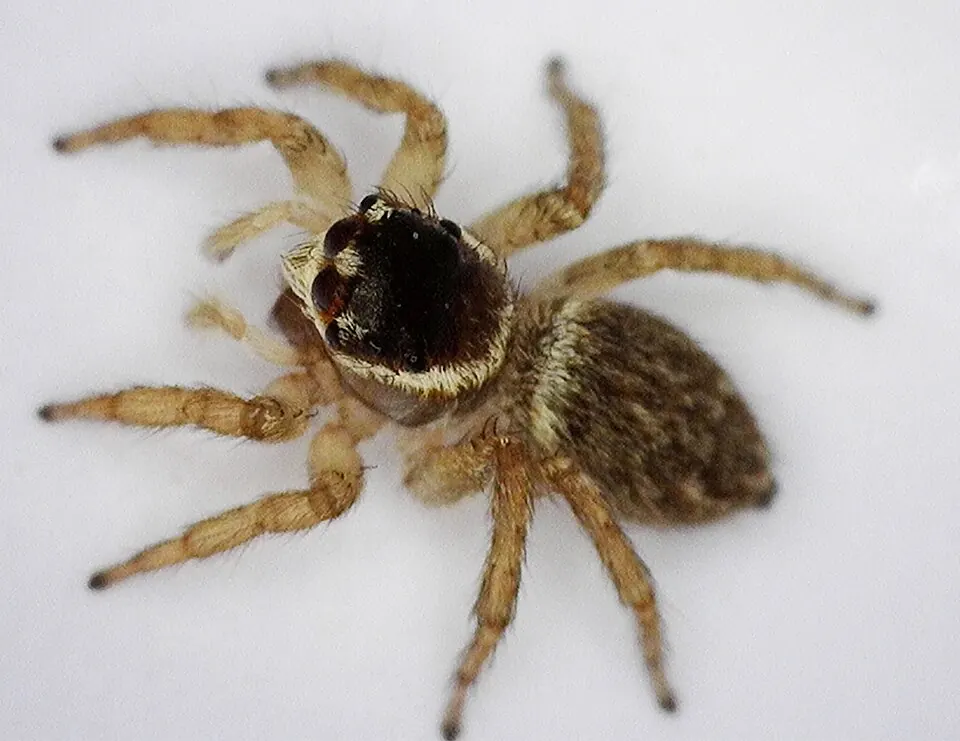 Usually low riskWhite-banded house jumping spiderSmall brown and grey house-hopper jumping spider, often seen on walls, fences, bark, foliage and around Australian homes.
 Painful but usually not life-threateningGarden wolf spiderCommon ground-running wolf spider from southern Australian gardens, lawns and bush edges, sometimes recognised by a Union Jack-style abdominal pattern.
 Usually low riskKnobbly crab spiderCamouflaged Australian crab spider with a knobbly bark-like body, often sitting still on bark, leaves or sheltered garden surfaces.
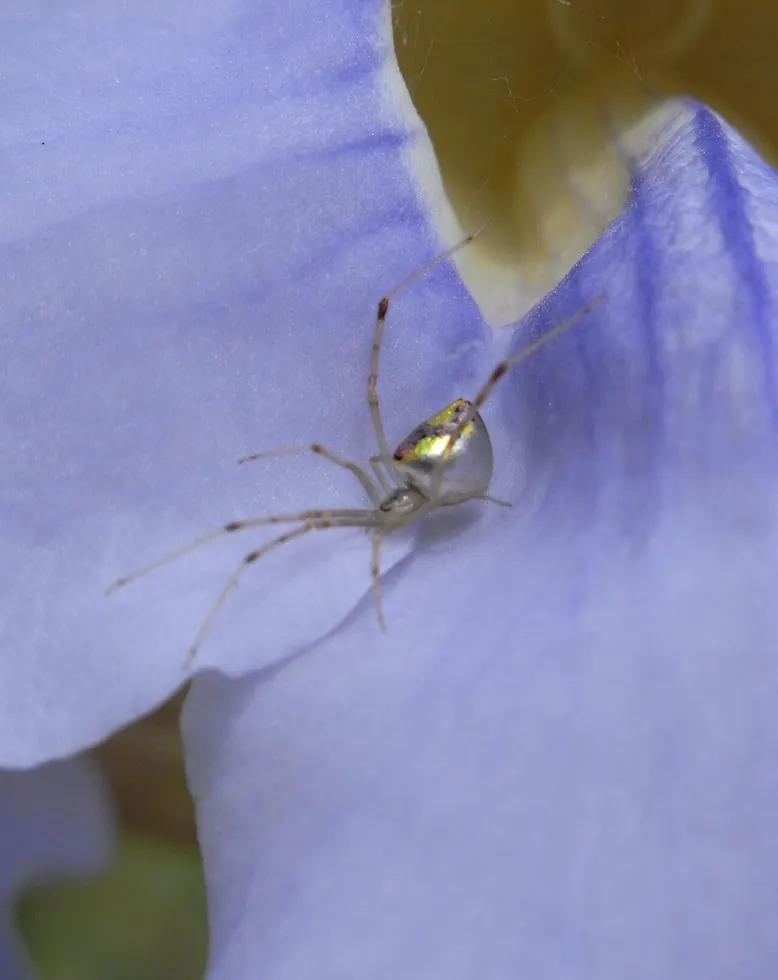 Usually low riskDewdrop spiderTiny silver-backed comb-footed spider that lives around orb-weaver webs and steals small prey from the host web.
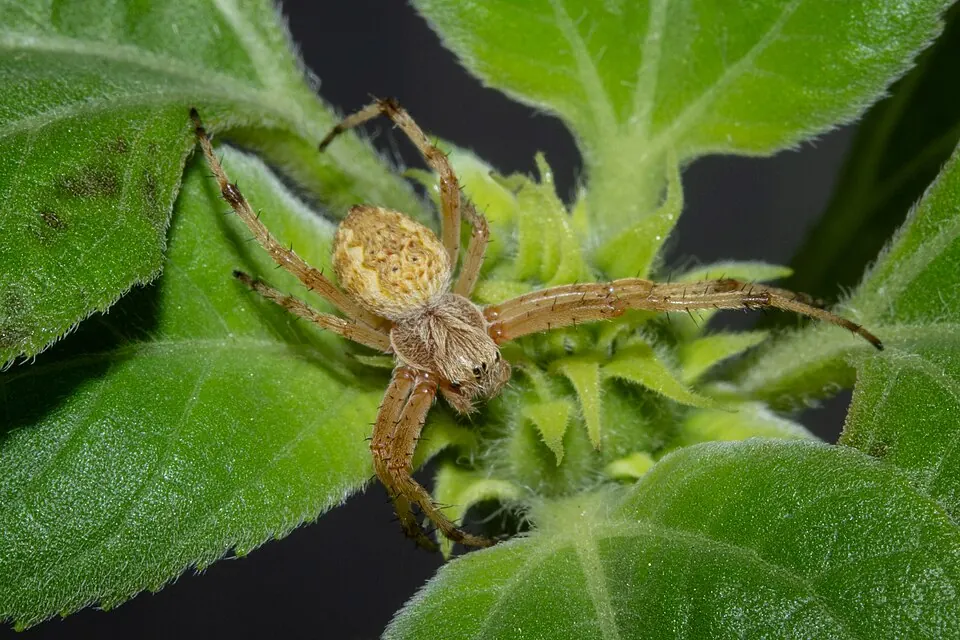 Usually low riskSooty orb-weaverSmall brown to dark Australian orb-weaver with sooty patterning, a round night web and a garden or shrubland habitat clue.
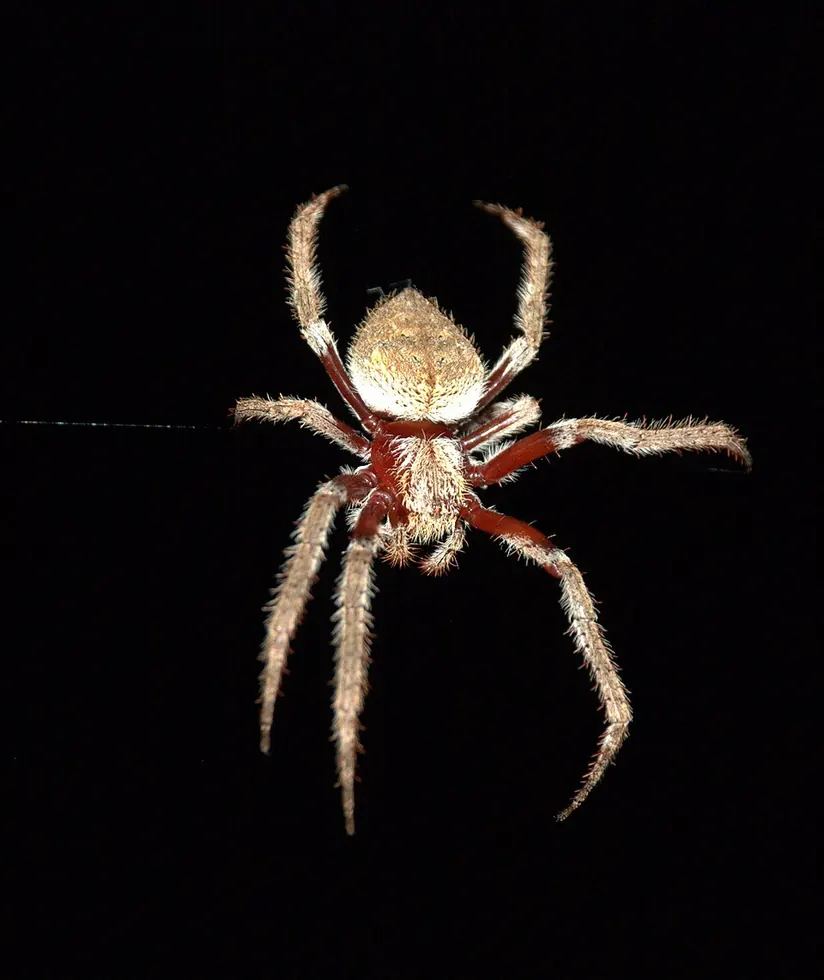 Usually low riskKnobbled garden orb-weaverHeavy-bodied Australian garden orb-weaver with two rear abdominal bumps, banded legs and a round night web in shrubs or garden edges.
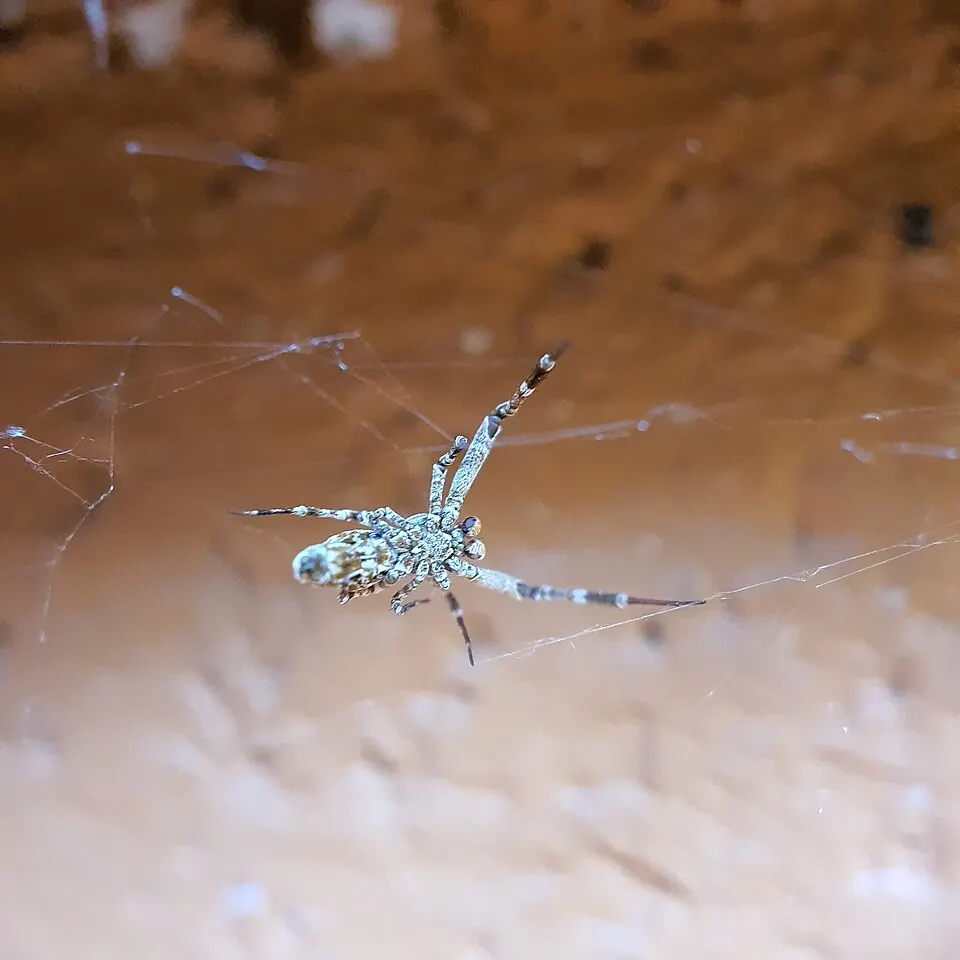 Usually low riskHackled orb-weaverSmall humped Australian hackled orb-weaver often found in communal, messy-looking webs around foliage, shrubs and sheltered house edges.
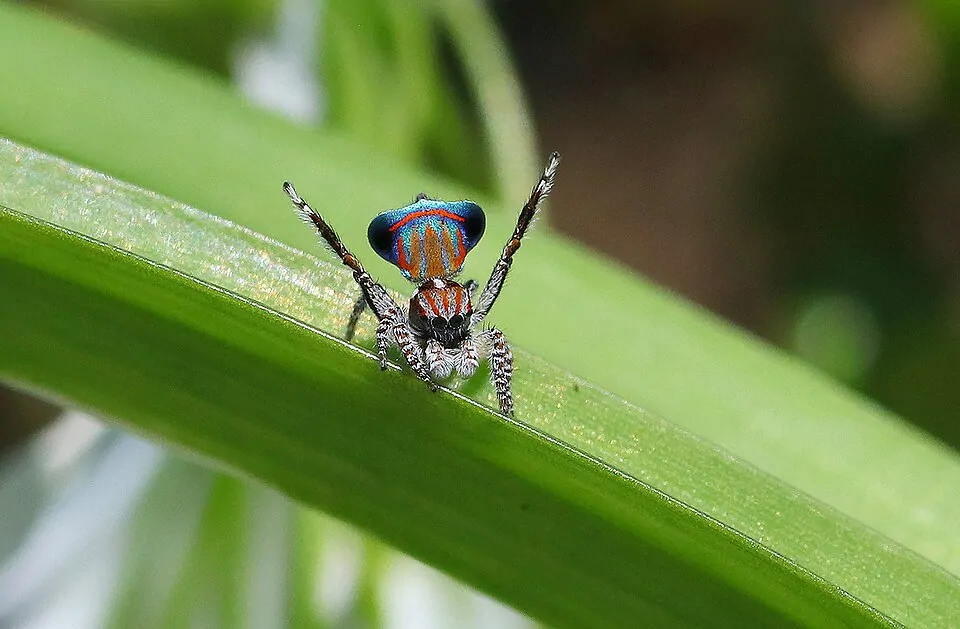 Usually low riskTasmanian peacock spiderTiny Australian peacock jumping spider with colourful male markings, large forward-facing eyes and a Tasmania or Victoria location clue.Usually low riskGrey huntsman spiderLarge flat grey-brown huntsman-type spider often seen on walls, ceilings, fences, sheds and tree trunks.Usually low riskBrown huntsman spiderCommon brown huntsman-type spider with a broad flat body, sideways legs and fast wall-running behaviour inside or around homes.
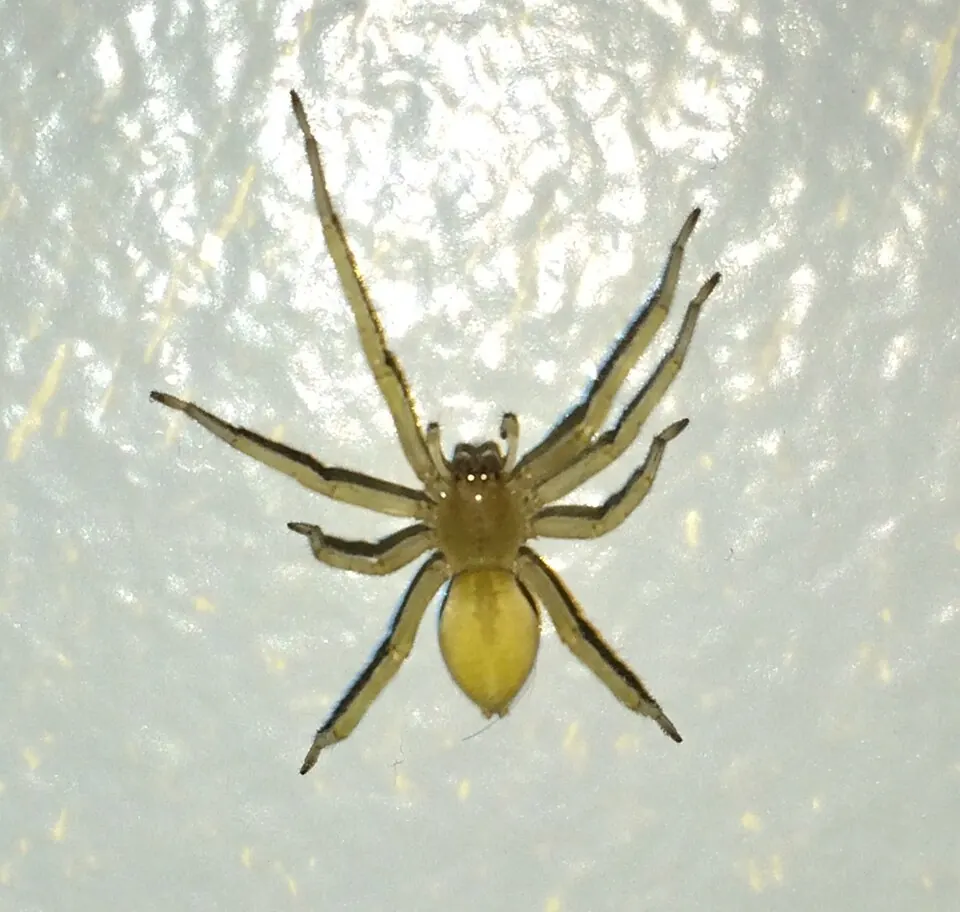 Painful but usually not life-threateningProwling spiderFast wandering ground or foliage hunter, often brown to orange-brown and confused with wolf spiders or sac spiders.Usually low riskSpotted ground spiderSmall to medium ground-running spider with dark body and pale or orange spots, often seen in leaf litter, gardens and paths.
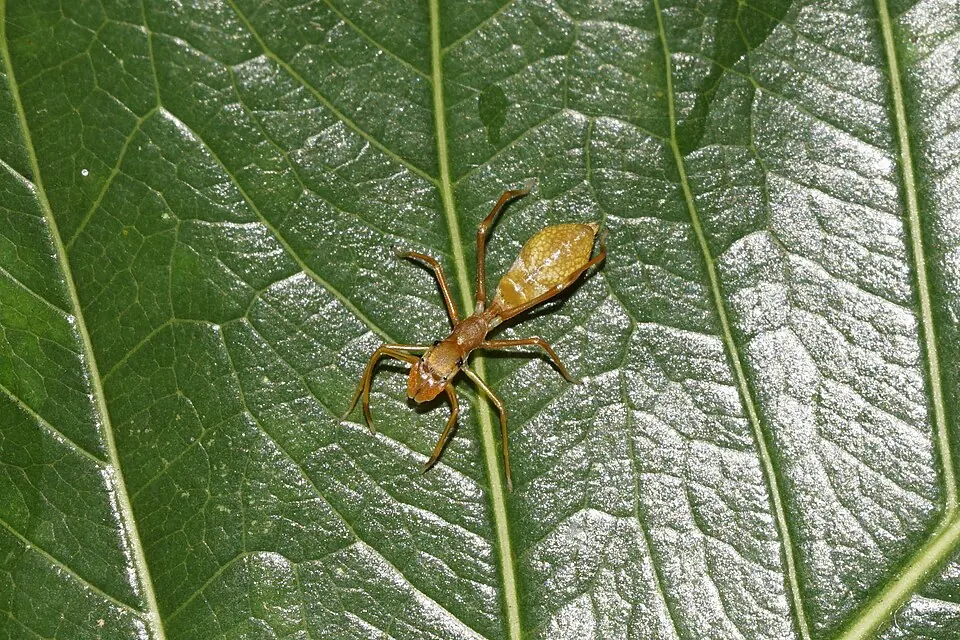 Usually low riskAnt-eating spiderSmall ground spider often associated with ants, with quick stop-start movement and a compact dark or patterned body.Usually low riskWhip spiderExtremely slender comb-footed spider with a long stick-like body, often found in fine webs around shrubs and garden edges.
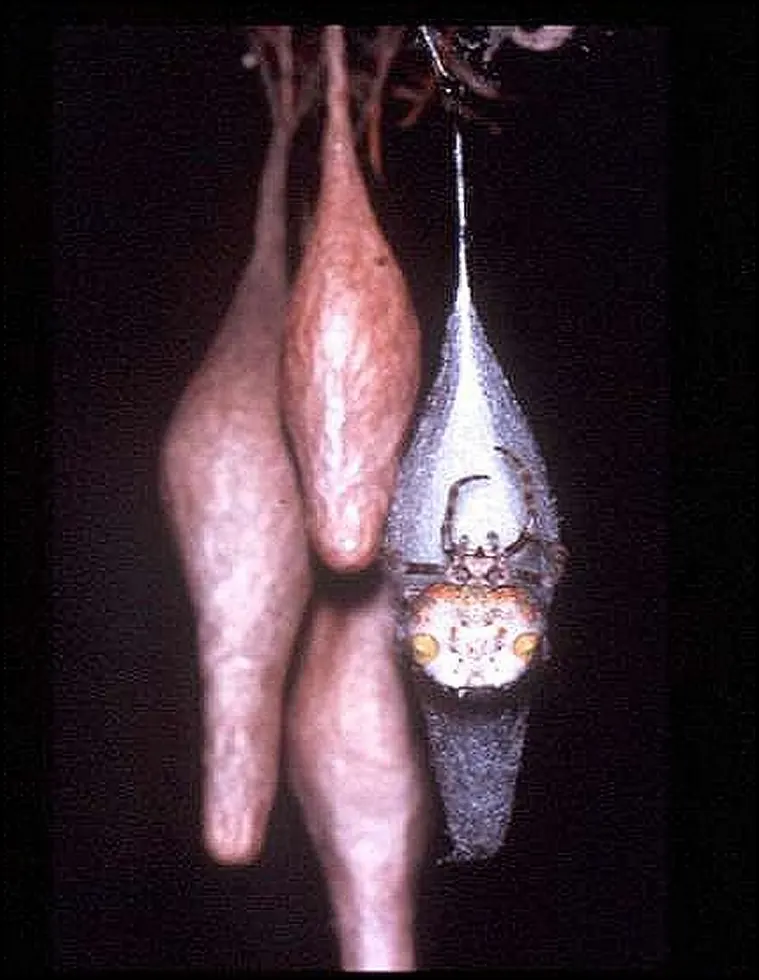 Usually low riskBird-lime spiderOddly shaped orb-weaver relative with bird-dropping camouflage, known for dangling sticky silk lines at night instead of a full orb web.Usually low riskJovial jumping spiderSmall Australian jumping spider recognised taxonomically as Apricia jovialis, usually encountered as an alert brown or patterned hunter on bark and vegetation.Usually low riskSlender crab spiderThin, twig-like crab spider that holds its front legs out and waits on stems, leaves or flowers for passing insects.Usually low riskGreen crab spiderSmall green ambush spider with sideways crab-like front legs, often found on leaves, flowers and garden plants.
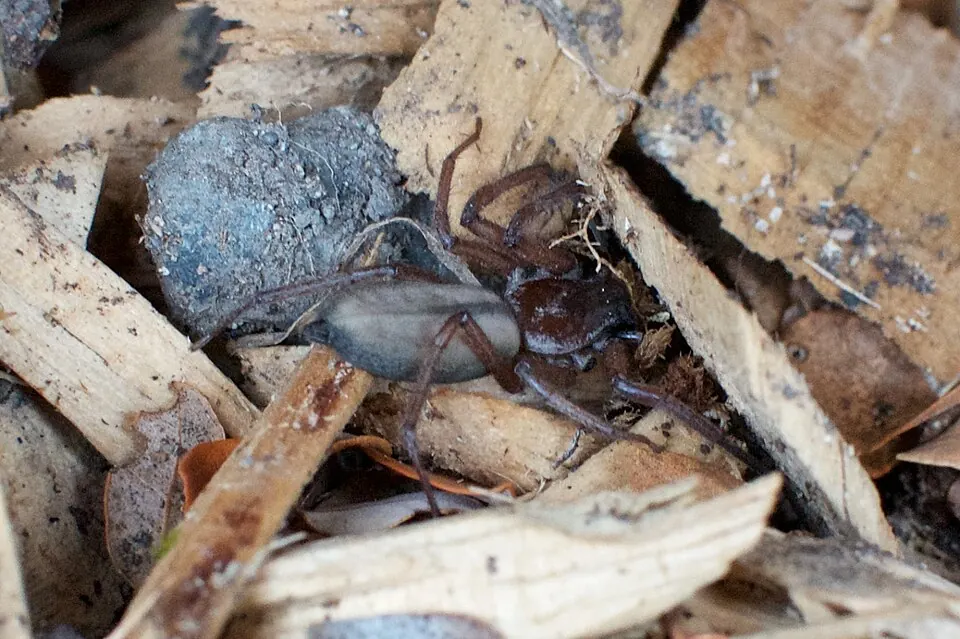 Usually low riskFlat rock spiderVery flattened ground spider that hides under rocks, bark or slabs and can be mistaken for a tiny huntsman or flattened bark spider.Usually low riskLong-spinneret ground spiderFast dark ground spider with noticeable rear spinnerets, usually found under debris, on floors, paths or dry garden edges.Usually low riskPanther hackled orb-weaverTiny mottled hackled orb-weaver with a humped outline, found in fine dry-silk webs under verandahs, rock overhangs and sheltered foliage.Usually low riskAustralian Union-Jack wolf spiderRobust patterned Australian wolf spider from the Tasmanicosa group, usually seen running on the ground or at a burrow entrance at night.Usually low riskGrey wolf spiderGrey-brown burrowing wolf spider whose retreat can have a circular trapdoor, sometimes left open while the spider is out hunting.Not known as medically significantIntertidal marine spiderUnusual coastal spider that lives among intertidal rocks and reefs, sealing itself inside a silk air chamber when the tide covers its retreat.Usually low riskFoliage-webbing social spiderSmall Australian desid that can build conspicuous communal-looking sheets and tangles binding leaves and twigs together.Usually low riskRunning crab spiderSmall, fast, flat-bodied hunter on foliage, bark or walls that resembles a crab spider but has more evenly sized legs and a running habit.Usually low riskPill flower spiderSmall southern Australian crab spider with an unusually rounded or lozenge-shaped abdomen, found on foliage in woodland and gardens.Usually local pain riskCape tangle-web spiderSmall dark brown comb-footed spider found in Australian buildings and sheltered tangles, sometimes confused with a young or unmarked redback.Usually low riskAnt-eating comb-footed spiderTiny Australian comb-footed spider that specialises in ants, throwing silk over an ant before biting it rather than relying on a large capture web.
TAS spider questions
Tasmania spider identification FAQ
How do I identify a spider in Tasmania?
Start with the clues you can safely see: suburb or region in Tasmania, size, body colour, leg shape, web type and where the spider was found. A clear photo helps, but location and web clues often change the likely match.
What dangerous spiders should I check first in Tasmania?
Check funnel-web, mouse spider and redback possibilities first when the spider is dark, robust, found near a burrow or messy sheltered web, or if a bite has occurred. If symptoms are severe or a funnel-web or mouse spider bite is possible, call 000.
Can I identify a Tasmania spider by picture?
A picture can narrow the possibilities, especially if it shows the body, legs, markings and web or hiding place. Do not handle or move a spider to get a better photo.
Can I identify a Tasmania spider by web?
Yes, web type can help narrow the match. In Tasmania, note whether the spider was in a messy corner web, a round orb web, a silk-lined burrow, a sheet-like web, or wandering without a web. Use that clue with size, colour and location.
What if the spider was large and flat in Tasmania?
A large, flat spider on walls, ceilings, bark or inside cars is often compared with huntsman-type spiders. Check size, leg spread, colour and where it was resting, and compare against other large ground or wall spiders before deciding.
Are brown recluse spiders common in Tasmania?
Brown recluse is a common search term, but most brown spiders seen in Tasmania are more likely to be local Australian spiders. Compare brown house spiders, huntsmans, wolf spiders, trapdoor spiders and other local lookalikes.
What should I do if someone may have been bitten?
For severe symptoms, breathing trouble, collapse, or suspected funnel-web or mouse spider bite, call 000. For poisons advice in Australia call 13 11 26. This site can help compare clues, but it cannot diagnose a bite.
Reference notes
How this guide stays cautious
Spider Identifier Australia uses visible clues to suggest likely possibilities. It is not a medical diagnosis or a formal species determination.
- Australian Museum spider informationAustralian spider identification, biology and dangerous spider context.
- Australian Museum funnel-web spidersFunnel-web range, identification and bite-safety context.
- Poisons Information CentreCall 13 11 26 for poisons advice from anywhere in Australia.
- healthdirect spider bitesAustralian spider bite first aid, emergency signs and white-tail bite evidence.
- Australian Museum redback spiderRedback identification, web clues and Australian distribution.
- Australian Museum spiders in the house and gardenCommon Australian house and garden spider context.
More spiders to compare in this region
Argiope protensa
Teardrop spider
A slender orb-weaver with a tapering abdomen, also called the tailed grass spider. Compare the tail, paired-leg posture and complete web.
Read identification guide →Clubiona robusta
Stout sac spider
A small Clubiona hunter associated with bark and silk retreats. Its resting sac is shelter, rather than a prey-catching web.
Read identification guide →Plesiothele fentoni
Lake Fenton trapdoor spider
A small Tasmanian mygalomorph with a patterned yellow-brown abdomen and a lidless silk-lined retreat in mossy habitat.
Read identification guide →Australomimetus species
Pirate spiders
Small spider-hunting mimetids that may enter another spider’s web. Rows of distinctive leg spines are a useful close-up clue.
Read identification guide →Miturga species
Lined spiders
Miturga are prowling hunters that can resemble wolf spiders. Some build dense silk retreats in low vegetation or beneath logs.
Read identification guide →